

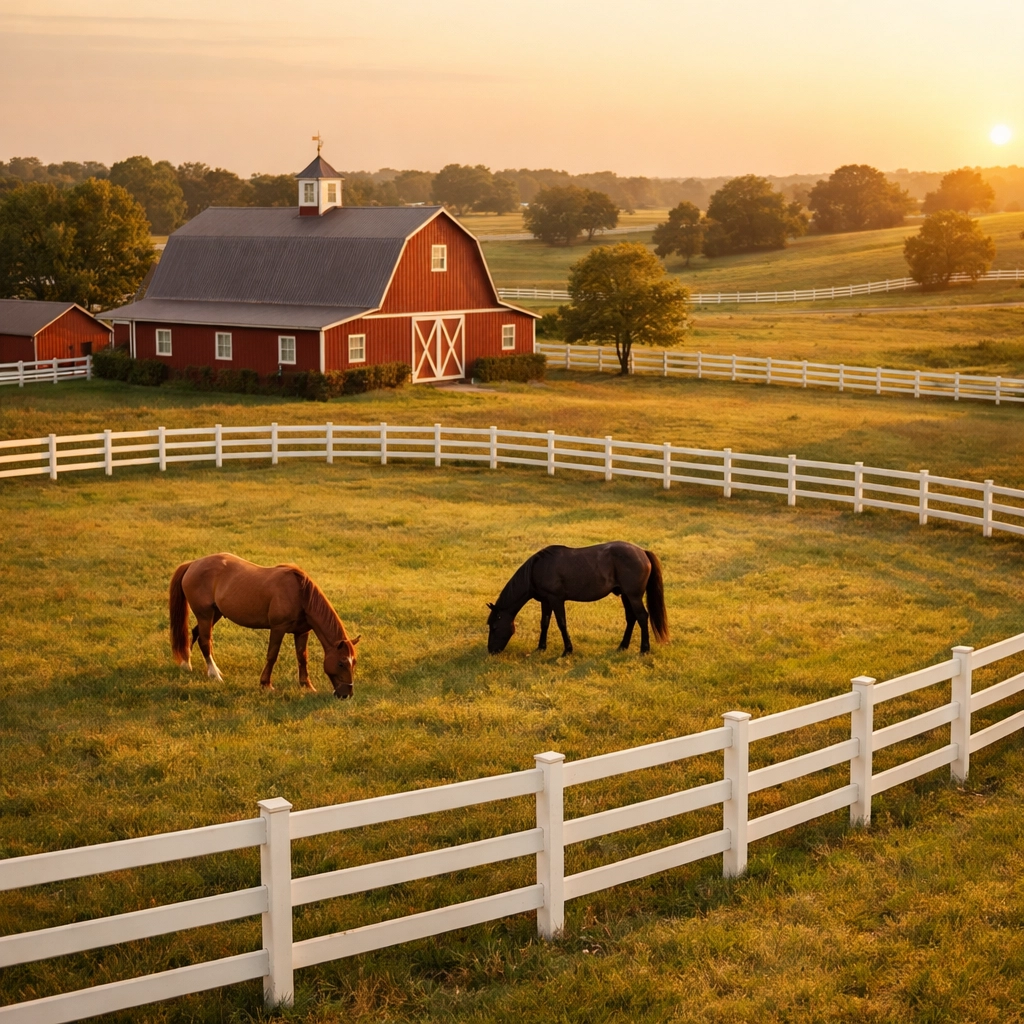
You've spent years boarding. You've hauled to lessons, paid monthly stall fees, and adjusted your schedule around barn hours. Now you're ready to bring your horses home, to a property that's truly yours.
Buying your first horse farm is exhilarating. It's also one of the most complex real estate transactions you'll make. Unlike typical home purchases, equestrian properties demand specialized knowledge about land management, barn infrastructure, zoning regulations, and the daily realities of horse care. The property that looks perfect during a sunny Saturday tour might reveal serious issues once you understand what to evaluate.
The good news? With the right preparation, you can avoid expensive mistakes and find a property that supports both your horses' wellbeing and your long-term goals.
Define Your Purpose Before You Start Searching
The first question isn't about acreage or barn style, it's about purpose. Are you creating a private sanctuary for your personal horses, or do you envision a boarding operation that generates income? Will you teach lessons, host clinics, or train competitively?
Your answer shapes everything else. A personal farm for two horses requires dramatically different infrastructure than a boarding facility for twelve. Lesson programs need parking, liability considerations, and accessible arenas. Breeding operations demand specialized facilities that training barns don't require.
Be honest about your goals. Many first-time buyers underestimate the management commitment required for commercial operations or overestimate their desire to handle boarder relationships. There's no wrong answer, just clarity that will guide your search toward properties that match your actual lifestyle.
Build Your Advisory Team First
Before you tour a single property, assemble a team that understands equestrian real estate. This isn't the time to use your cousin's real estate agent or the first lender who returns your call.
You need:
A real estate agent experienced in horse properties. They should understand the difference between usable pasture and decorative acreage, recognize quality barn construction, and know local zoning regulations specific to livestock. At Carolina Horse Farm Realty, we work exclusively with equestrian properties across the Charlotte Metro area, we speak horse first, real estate second.
A lender familiar with agricultural or specialty properties. Rural properties with significant acreage often require different financing than suburban homes. Some lenders balk at properties with income-generating potential or unique features like indoor arenas.
A real estate attorney who handles farm transactions. Equestrian properties involve considerations like water rights, easements for trail access, and agricultural exemptions that standard residential closings don't address.
This team will save you time, money, and heartache. They'll identify red flags you wouldn't notice and negotiate terms that protect your interests.
Understand the Complete Financial Picture
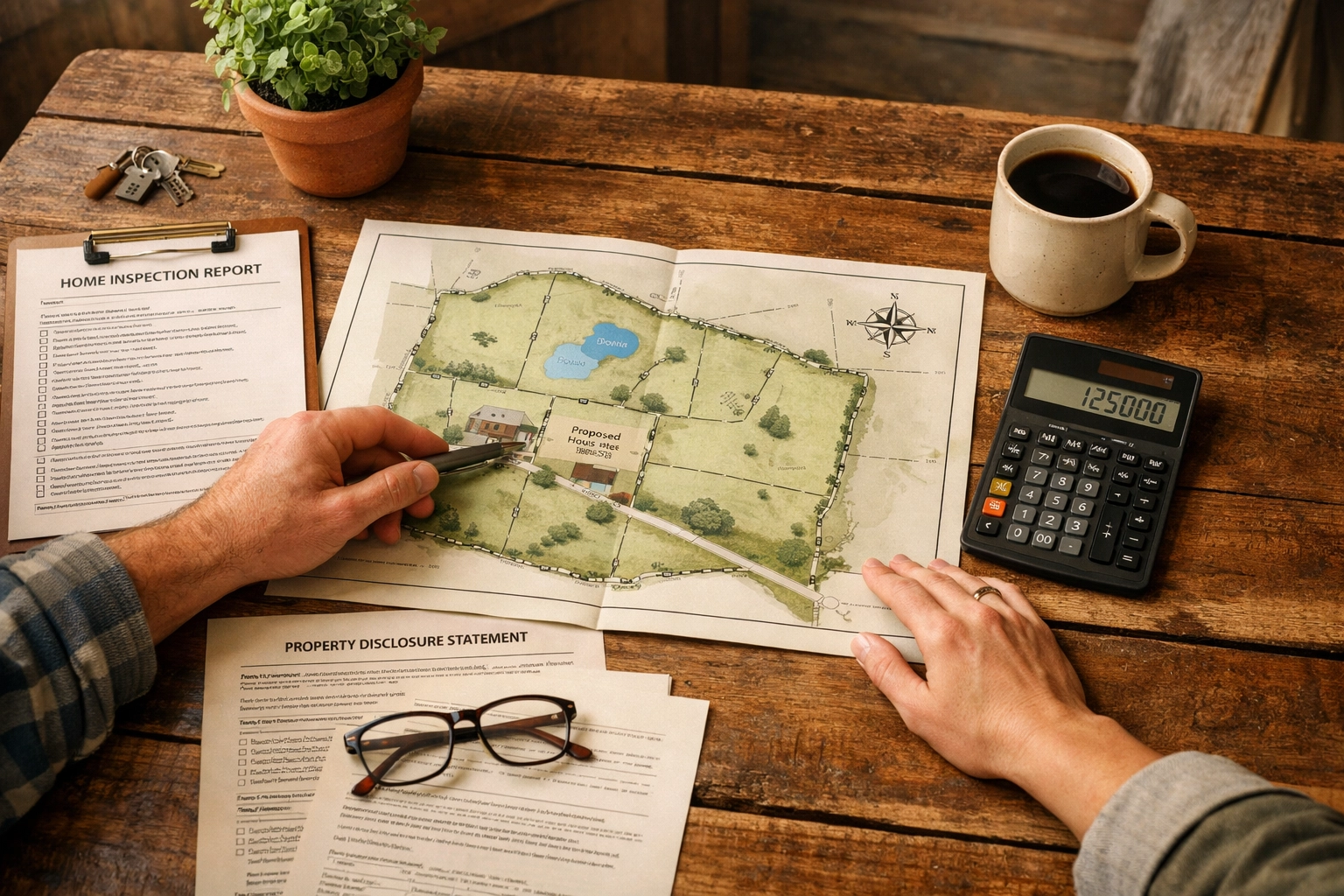
Mortgage pre-approval tells you what a bank will lend, not what you can comfortably afford once you factor in the true cost of farm ownership.
Beyond your mortgage payment, budget for:
- Property taxes (often higher on larger acreage)
- Utilities for both house and barn
- Well and septic maintenance
- Fence repairs and replacement
- Arena footing maintenance
- Equipment purchases (tractor, mower, drag)
- Emergency veterinary access
- Feed and bedding storage infrastructure
- Farm labor if you can't manage everything yourself
Many first-time buyers focus exclusively on the purchase price and then feel financially stretched once they're managing daily farm expenses. A property at the top of your budget leaves no room for the inevitable fence repair or barn roof replacement.
If your down payment is less than 20 percent, you'll also need mortgage insurance, which adds to monthly costs.
The 10 Questions You Must Ask Before Scheduling a Tour
Don't waste time touring properties that won't work. Ask these questions upfront, before you fall in love with a barn you can't actually use.
1. What is the property's current zoning, and are horses explicitly allowed?
Some municipalities restrict livestock or limit the number of animals per acre. Others prohibit commercial equestrian operations in certain zones. Verify that your intended use is permitted and understand any limitations on future expansion.
2. How many acres of usable pasture does the property actually have?
Total acreage and usable horse acreage are rarely the same number. Exclude woodlands, wetlands, steep slopes, and areas unsuitable for grazing. In North Carolina, plan on roughly 1.5 to 2 acres of quality pasture per horse for rotational grazing.
3. What is the water source and capacity?
Horses drink 5-10 gallons of water daily, more in hot weather or heavy work. Well capacity matters enormously, especially if you're watering pastures, filling water troughs, and running a household. Ask about flow rate, well depth, and whether the system has supported horses previously. Municipal water is simpler but may come with restrictions or higher costs.
4. What is the condition and design of the barn?
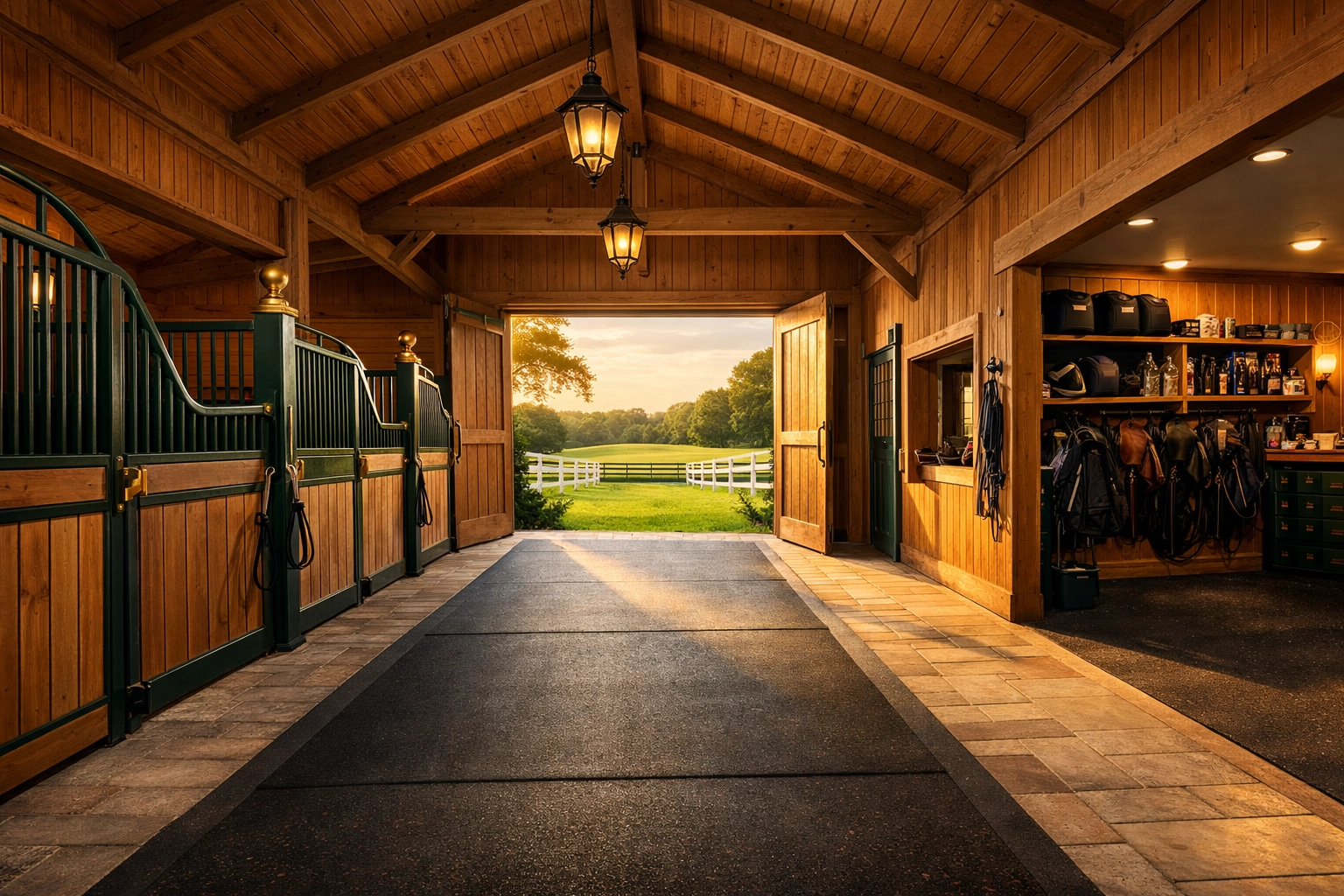
Look beyond aesthetics. Is the barn structurally sound? Does it have proper ventilation? Are stalls sized appropriately (at least 12×12 for average horses)? Is the electrical system safe and sufficient? Are there dedicated spaces for feed storage, tack, medications, and hay that keep these areas separate from stalls?
5. What is the fencing type, condition, and configuration?
Fencing is one of the most expensive infrastructure elements you'll maintain. Inspect carefully for old barbed wire, rotting posts, sagging lines, and gaps. Board fencing requires regular maintenance. High-tensile or no-climb wire is durable but must be properly installed. Electric fencing needs consistent power and maintenance.
6. How is the land graded, and where does water drain?
Poor drainage creates muddy paddocks, damages pastures, and leads to hoof problems. Walk the property during or after rain if possible. Note where water pools, how quickly it drains, and whether barn aisles and turnout areas stay manageable in wet weather. Flat or gently sloping land is ideal: avoid steep grades and gullies.
7. Has the property been soil tested recently?
Soil health determines pasture quality. Testing reveals pH levels, nutrient deficiencies, and contamination issues. It also helps you understand fertilization needs and whether the land has been properly managed. This is especially critical in areas with heavy clay soil common throughout the Charlotte region.
8. Are there toxic plants or environmental hazards present?
Walk fencelines and pastures looking for red maple trees, black walnut, wild cherry, and other species toxic to horses. Check for old debris, buried trash, rusty equipment, and abandoned wells. These hazards aren't always obvious during a casual tour but pose serious risks to horses.
9. What are the setback requirements and building restrictions?
If you plan to add a barn, expand stalls, or build an arena, understand setback requirements from property lines, wells, septic systems, and water sources. Some counties have strict regulations about new agricultural construction that could limit your plans.
10. What is the insurance situation?
Standard homeowner's policies often exclude or severely limit equestrian liability coverage. If you plan to board horses, teach lessons, or host any activities involving other people's horses, you'll likely need commercial farm insurance. Get quotes before you commit: the cost might surprise you.
Additional Considerations That Matter
Accessibility and location affect your daily life more than you might expect. A property 45 minutes from your current home sounds manageable until you're driving it twice daily to feed. Consider your commute, emergency vet access, and proximity to equestrian services like farriers and feed stores.
Hay and equipment storage needs are substantial. A year's worth of hay for three horses requires significant covered storage. Equipment like tractors, mowers, and arena drags need protection from weather.
Existing infrastructure quality often matters more than quantity. A well-maintained three-stall barn with good footing and drainage is vastly superior to a ten-stall facility with rotting boards and standing water.
Neighborhood dynamics influence your experience. Are neighbors equestrian-friendly, or will you face complaints about flies, manure, and trailer traffic? Is the area growing residential, which might bring zoning pressure in the future?
Moving Forward With Confidence
Buying your first horse farm is a significant decision: but it doesn't have to be overwhelming. With clear goals, a knowledgeable team, and the right questions asked upfront, you can find a property that serves your horses well and supports your equestrian lifestyle for years to come.
The Charlotte Metro area offers exceptional opportunities for horse farm buyers, from the established equestrian communities of Waxhaw and Weddington to the more rural acreage available in Union County and York County, SC. Each area has unique characteristics, zoning considerations, and property styles worth exploring.
Ready to start your search with an agent who understands horses first? Browse our current equestrian properties or reach out to discuss your specific needs. We're here to help you find not just a property, but a place where both you and your horses can thrive.

