

Let's clear something up right away: there aren't really "secrets" that Charlotte-area equestrian professionals are hiding from you. But there are fundamental pasture management practices that many horse farm owners overlook: often because they weren't taught them, or because they assume their property will maintain itself.
If you've walked your pastures lately and noticed bare patches, invasive weeds taking over, or soil that turns to mud with every rain, you're not alone. North Carolina's climate presents unique challenges for maintaining healthy grazing land, and the difference between lush, productive pastures and depleted ground often comes down to a handful of management decisions.
Whether you currently own a horse farm in the Charlotte Metro area or you're evaluating equestrian properties with an eye toward long-term land quality, understanding soil health isn't optional: it's foundational.
The Foundation: Why Soil Testing Comes First
You can't manage what you don't measure. Before you lime, fertilize, or plant a single seed, you need to know what your soil actually needs.
Contact your local Soil and Water Conservation office or Southern States for soil testing. In most North Carolina counties, basic testing is free or low-cost. You'll receive a detailed analysis showing pH levels, nutrient deficiencies, and specific recommendations for amendments.
North Carolina soils tend toward acidity, particularly in our region's clay-heavy areas. Without testing, you're essentially guessing: and expensive fertilizer applications won't help if your pH is too low for nutrient uptake. Testing takes the guesswork out of pasture management and gives you a baseline to track improvement over time.
Test every three years minimum, and always test before purchasing a property if pasture quality matters to your operation.
Rotational Grazing: The Single Most Effective Practice
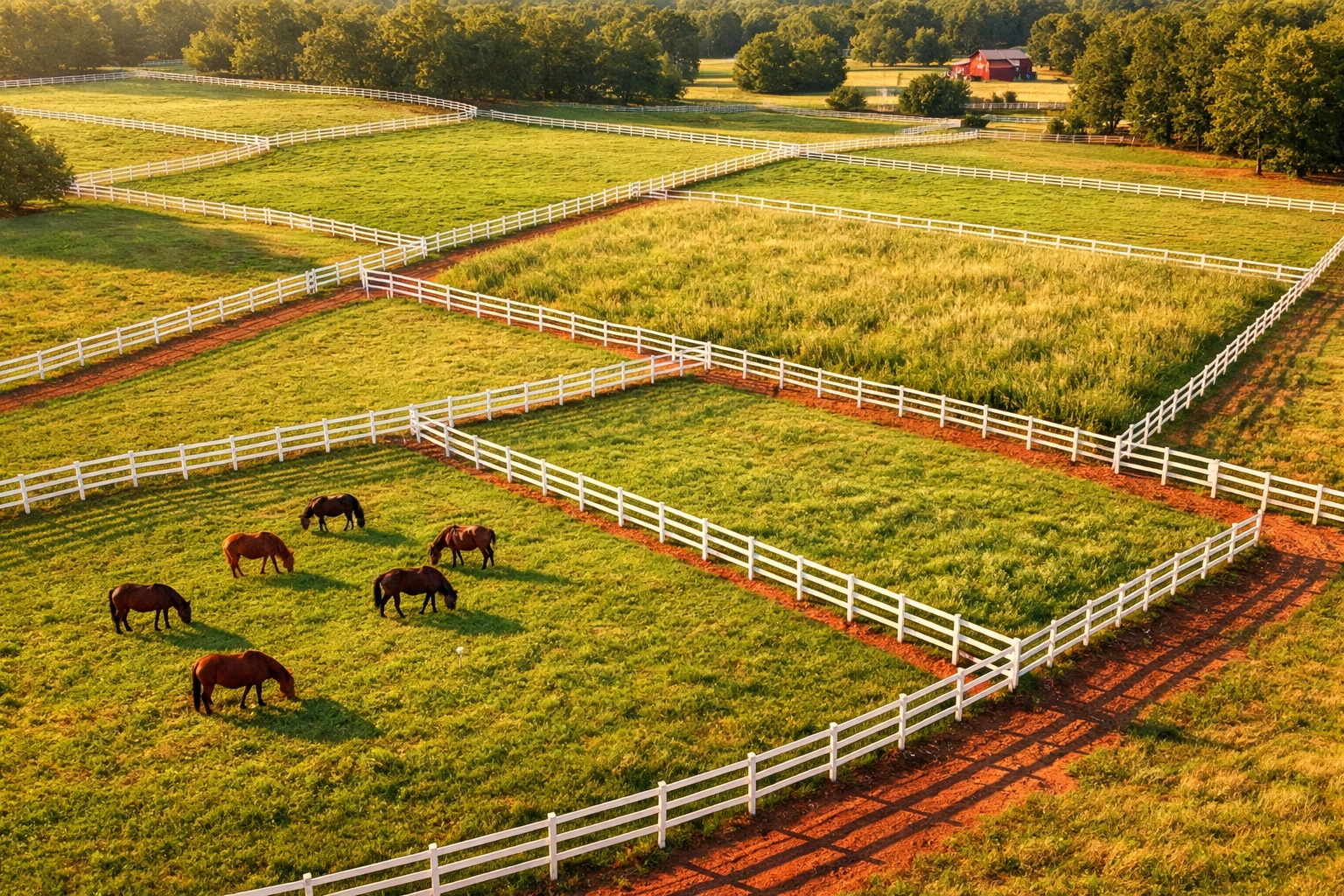
If you implement only one practice from this entire article, make it rotational grazing. This simple system prevents overgrazing, maintains healthy root systems, and dramatically improves pasture productivity: yet many Charlotte-area farms still practice continuous grazing.
The basic principle: Divide your grazing land into multiple paddocks and rotate horses through them systematically, allowing grazed areas to rest and recover.
Even a simple two-paddock system outperforms continuous grazing. Turn horses into a paddock when grass reaches 6 to 8 inches tall. Remove them when it's grazed down to 3 to 4 inches: never lower. Then rest that paddock while horses graze the second section.
More paddocks allow for longer rest periods and more precise grazing management, but you don't need a complex system to see results. Start simple and refine as you observe how your specific pastures respond.
The math works in your favor: rotational grazing can support 50% more horses per acre compared to continuous grazing, while simultaneously improving soil health and reducing weed pressure.
The Four-Inch Rule: Leave More Than You Think
Here's where many well-intentioned horse owners go wrong: they graze paddocks down to dirt, thinking they're maximizing forage use.
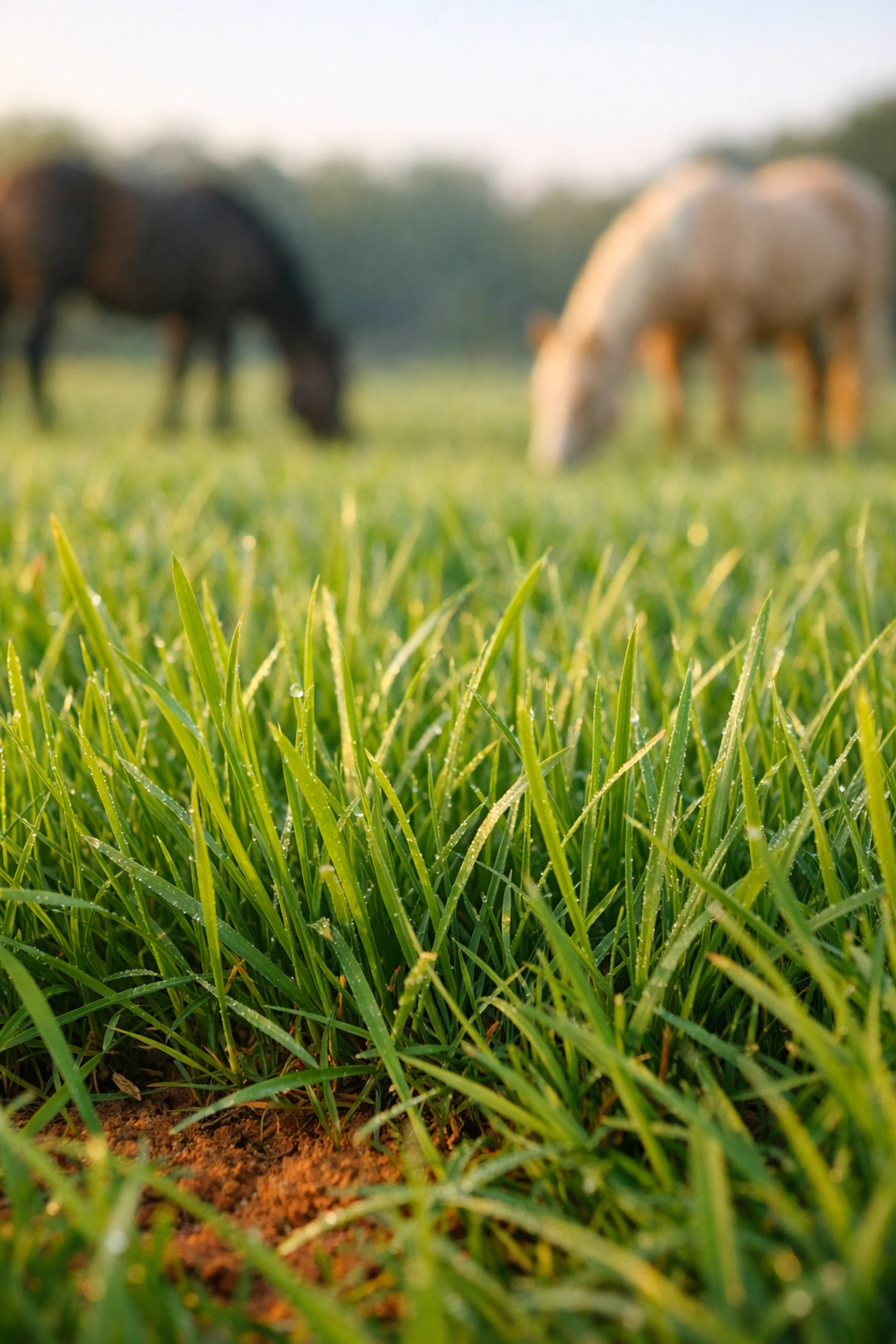
Always leave at least 4 inches of growth after grazing. This isn't wasteful: it's protective.
Leaving adequate residual growth:
- Protects developing meristems (the growth points of plants)
- Results in deeper root systems and greater root mass
- Keeps soil cooler during North Carolina's hot summers
- Maintains photosynthetic capacity for faster regrowth
- Prevents bare ground where weeds establish
Think of it this way: the grass you leave behind is working capital, not waste. Those remaining leaves capture sunlight and drive the regrowth that will feed your horses through the next rotation.
Bare ground is your enemy. Once you've grazed to dirt, you've damaged root systems, exposed soil to erosion and compaction, and created ideal conditions for invasive species like buttercup, thistle, and johnsongrass.
Seasonal Strategies for North Carolina's Climate
Our climate presents specific challenges that require adjusted management throughout the year.
Spring: This is both your best opportunity and biggest risk. Cool-season grasses like fescue and orchardgrass grow aggressively in March and April. The temptation is to turn horses out early and let them graze freely. Resist this. Spring is when you should be most disciplined about rotation and grazing height. Overgrazing during spring growth sets you up for failure during summer dormancy.
Summer: Warm-season grasses thrive, but cool-season varieties go semi-dormant during heat and drought. This is when many Charlotte-area pastures deteriorate. Reduce grazing pressure during stress periods. Increase hay feeding and restrict pasture access to prevent damage. A few weeks of sacrifice now prevents months of recovery later.
Fall: As temperatures cool, cool-season grasses rebound. This is your second growth period and an opportunity to build root reserves before winter. The last paddock you graze in fall should not be the first you graze in spring: it needs maximum recovery time before the next season's use.
Winter: Limit traffic on wet, soft ground. North Carolina's freeze-thaw cycles combined with our clay soils create ideal conditions for compaction and mud. Consider sacrifice areas or drylots during particularly wet periods.
Companion Planting: Grasses and Legumes Working Together
A healthy pasture isn't a monoculture. The best North Carolina horse pastures combine cool-season grasses (tall fescue, orchardgrass, timothy) with legumes like clover.
Legumes fix nitrogen naturally, reducing fertilizer needs. They also provide nutritional diversity and remain green during periods when grasses go dormant. A well-balanced stand naturally competes with weed seedlings, reducing herbicide requirements.
When establishing or overseeding pastures, aim for roughly 70-80% grass and 20-30% legume coverage. This ratio provides stability, nutrition, and natural weed suppression.
Mowing: Not Just for Aesthetics
Strategic mowing controls weeds, promotes dense growth, and prevents seedhead formation that reduces forage quality.
Mow after horses rotate out of a paddock, cutting to about 4-6 inches. This clips off weed tops before they seed, forces grasses to tiller (produce additional shoots), and creates more uniform growth for the next grazing cycle.
Avoid mowing during extreme heat or drought stress. And never mow lower than 4 inches: you'll damage plants and expose soil.
Common Mistakes Charlotte-Area Farm Owners Make
Overstocking: The number one soil health destroyer. Just because your property is zoned for a certain number of horses doesn't mean your pastures can sustainably support that many. Carrying capacity depends on soil quality, grass species, climate, and management intensity.
Neglecting drainage: North Carolina clay doesn't drain naturally. Standing water and saturated soils kill grass roots and create compaction. Address drainage issues before they become pasture-wide problems.
Applying products without testing: Lime and fertilizer are expensive. Random applications based on what your neighbor does waste money and potentially harm your soil ecosystem.
Ignoring seasonal growth patterns: Managing pastures the same way year-round doesn't account for North Carolina's distinct growing seasons and stress periods.
Waiting too long to address problems: Bare patches don't heal themselves. Weed infestations spread. Compacted areas worsen. Early intervention is always easier and less expensive than remediation.
The Real Estate Perspective: Soil Health and Property Value
When evaluating horse farms for sale in the Charlotte Metro area, pasture quality tells you volumes about how a property has been managed. Well-maintained pastures with thick grass coverage, minimal weeds, and good drainage indicate thoughtful stewardship. Depleted, weedy, or eroded pastures signal either neglect or overstocking: and represent significant restoration costs.
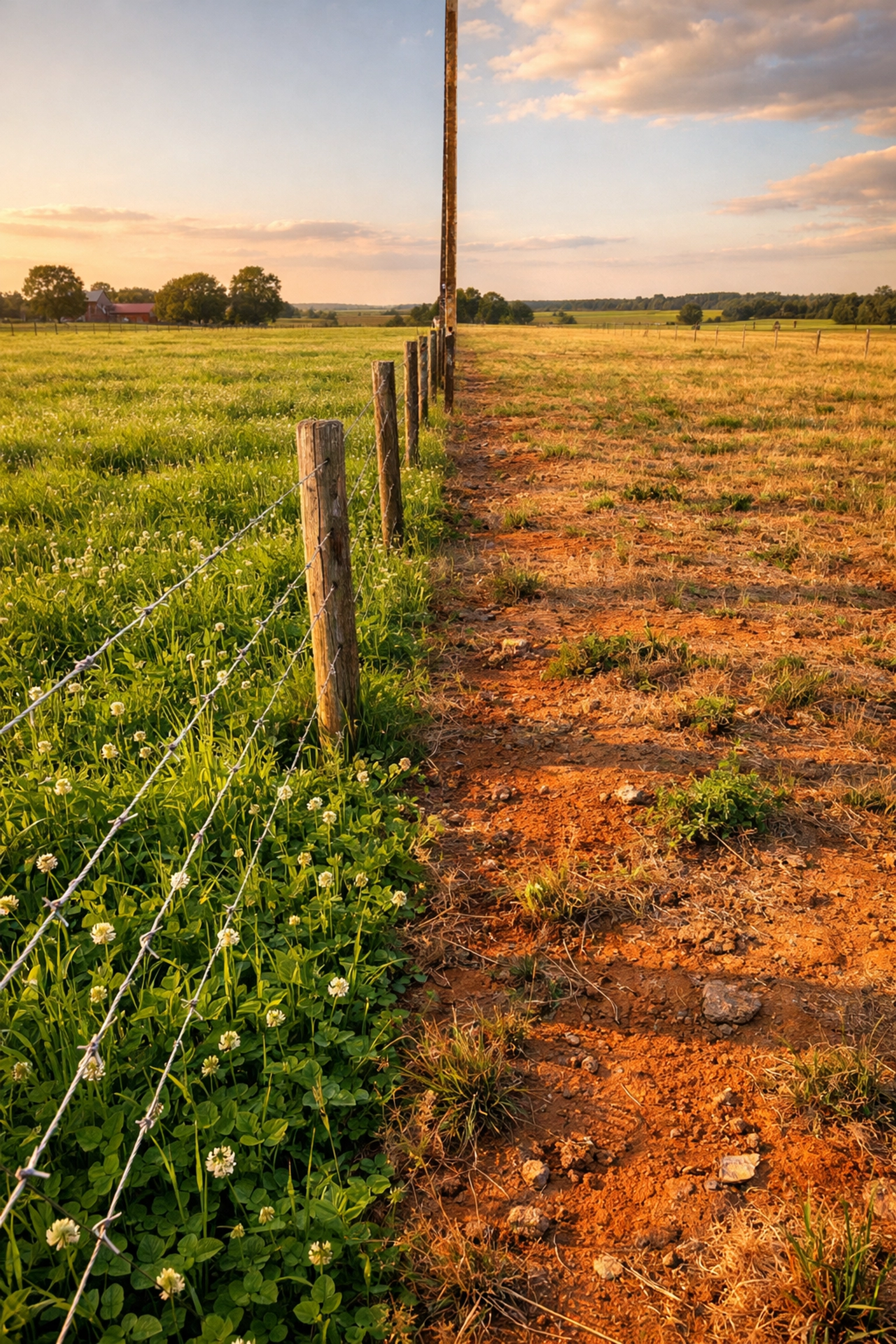
If you're currently exploring equestrian properties, pay attention to pasture condition during your visits. Walk the fence lines. Note grass species and density. Look for bare areas, gullies, and standing water. These observations provide insight into both current condition and the investment required to bring pastures up to your standards.
For sellers, investing in pasture improvement before listing pays dividends. Healthy pastures photograph beautifully, signal quality management, and command premium prices from knowledgeable buyers.
Moving Forward with Your Land
Soil health isn't complicated, but it does require attention and consistency. The practices outlined here: soil testing, rotational grazing, maintaining adequate residual height, and seasonal adjustment: work because they align with how pasture ecosystems naturally function.
Whether you're managing an existing farm or searching for the right property to start your equestrian operation, understanding these fundamentals positions you for long-term success. North Carolina offers exceptional opportunities for horse farm ownership, and properties with well-managed pastures represent both lifestyle quality and sound investment.
If you're evaluating horse farms in the Charlotte area and want guidance on assessing pasture quality and long-term potential, our team understands the intersection of land management and real estate value. We're horse people first, and we know what healthy Carolina pastures should look like.
Contact us to discuss properties that match your equestrian vision: and the land to support it sustainably.

