

When serious equestrian buyers tour a luxury horse property in the Charlotte metro area, they're not just looking at stall counts or arena dimensions. They're envisioning their daily routine: that early morning feed check, the satisfaction of a well-organized tack room, the pride of hosting a small schooling show. High-end stable design isn't about flash: it's about creating a workspace that supports both horse welfare and the rider's lifestyle without compromise.
After working with dozens of luxury equestrian buyers throughout Mecklenburg, Union, and York counties, we've learned that today's discerning horse owners want facilities that blend European craftsmanship with practical Carolina horse keeping. They expect their stable complex to function as seamlessly as their main residence, with thought given to every detail from drainage to aesthetics.
The Foundation: Strategic Siting and Layout
Before a single post goes up, high-end stable design begins with intelligent property planning. Luxury buyers recognize that proper siting determines everything from daily efficiency to long-term maintenance costs.
The stable should sit on naturally elevated, well-drained ground: critical in North Carolina where summer thunderstorms can drop inches in an afternoon. Positioning the barn to capture prevailing breezes from the southwest reduces fly pressure and keeps air moving through the aisle during humid July days. Smart buyers also look for orientation that provides natural shade during summer months while maximizing southern sun exposure in winter.
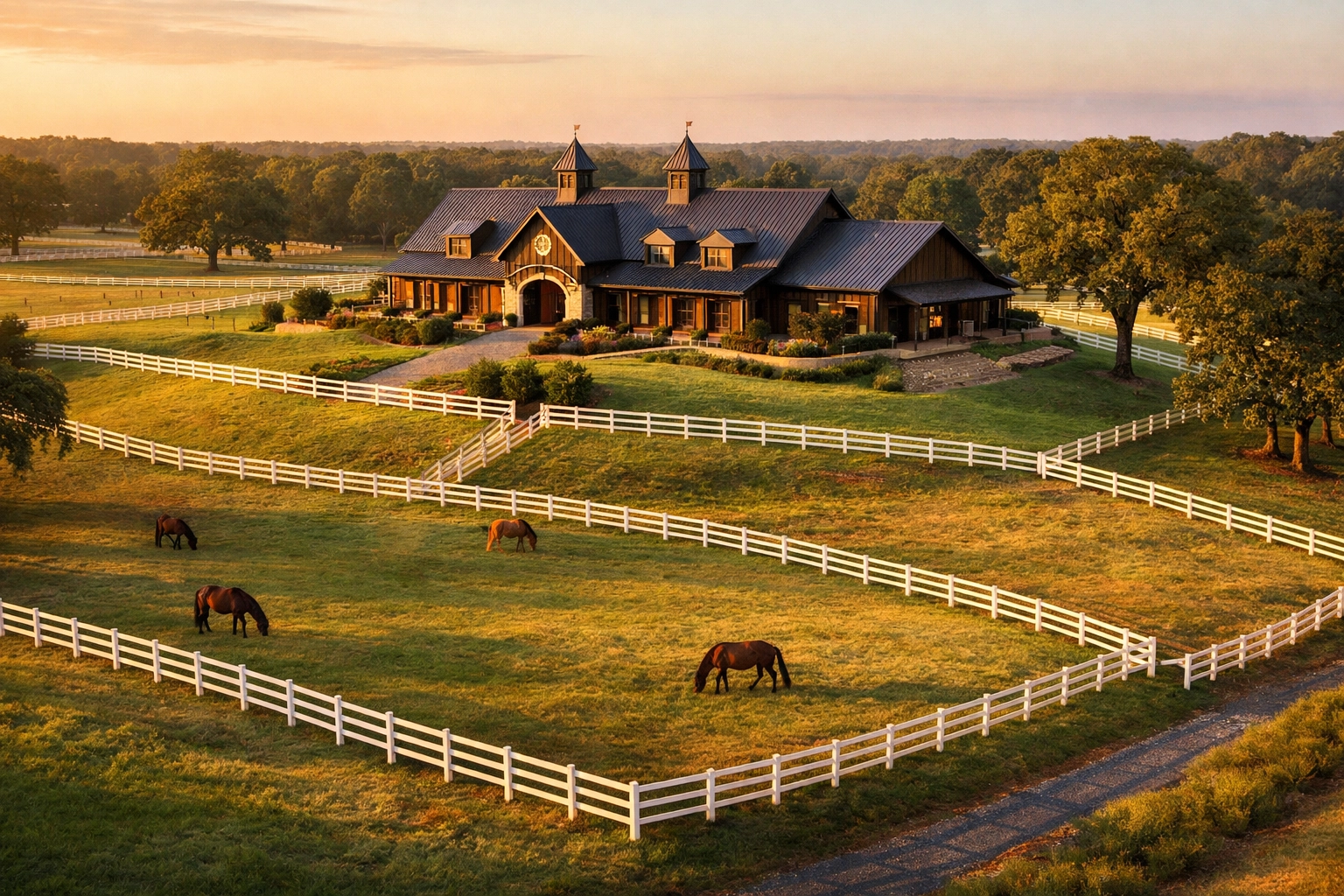
Access matters tremendously. The stable complex should connect logically to both the main residence and property entrance, creating a functional work triangle. You'll want easy truck and trailer access without compromising the estate's overall aesthetic or forcing service vehicles past your front entrance. The best properties feature discreet service roads that separate guest traffic from daily farm operations.
Stall Design That Prioritizes Horse Health
In luxury markets like Waxhaw, Weddington, and Marvin, buyers expect stalls that reflect current best practices in equine management, not just adequate square footage.
Twelve-by-twelve foot stalls represent the absolute minimum, with many high-end facilities opting for 12×14 or even 14×14 dimensions, particularly for warmbloods and sport horses. Ceiling height should exceed ten feet to accommodate proper ventilation and reduce injury risk for horses that rear or play in their stalls.
European-style stall fronts have become the standard in upscale Charlotte facilities. These systems feature full or half grilles that allow horses to see their neighbors and environment while maintaining safety. Look for powder-coated steel construction that resists rust in our humid climate, paired with heavy-duty hardware that will withstand decades of use.
Flooring represents one of the most significant investments in stable construction. Poured rubber pavers over compacted stone base provide superior drainage, cushioning, and longevity compared to traditional clay or screenings. They virtually eliminate dust, simplify stall cleaning, and reduce bedding costs: practical benefits that luxury buyers appreciate despite the higher upfront cost.
The Breezeway: Your Stable's Central Workspace
The center aisle, or breezeway, functions as the stable's primary workspace and should be designed accordingly. Sixteen feet represents the preferred width for high-end facilities, providing ample room for cross-ties while allowing golf carts or small tractors to pass safely.
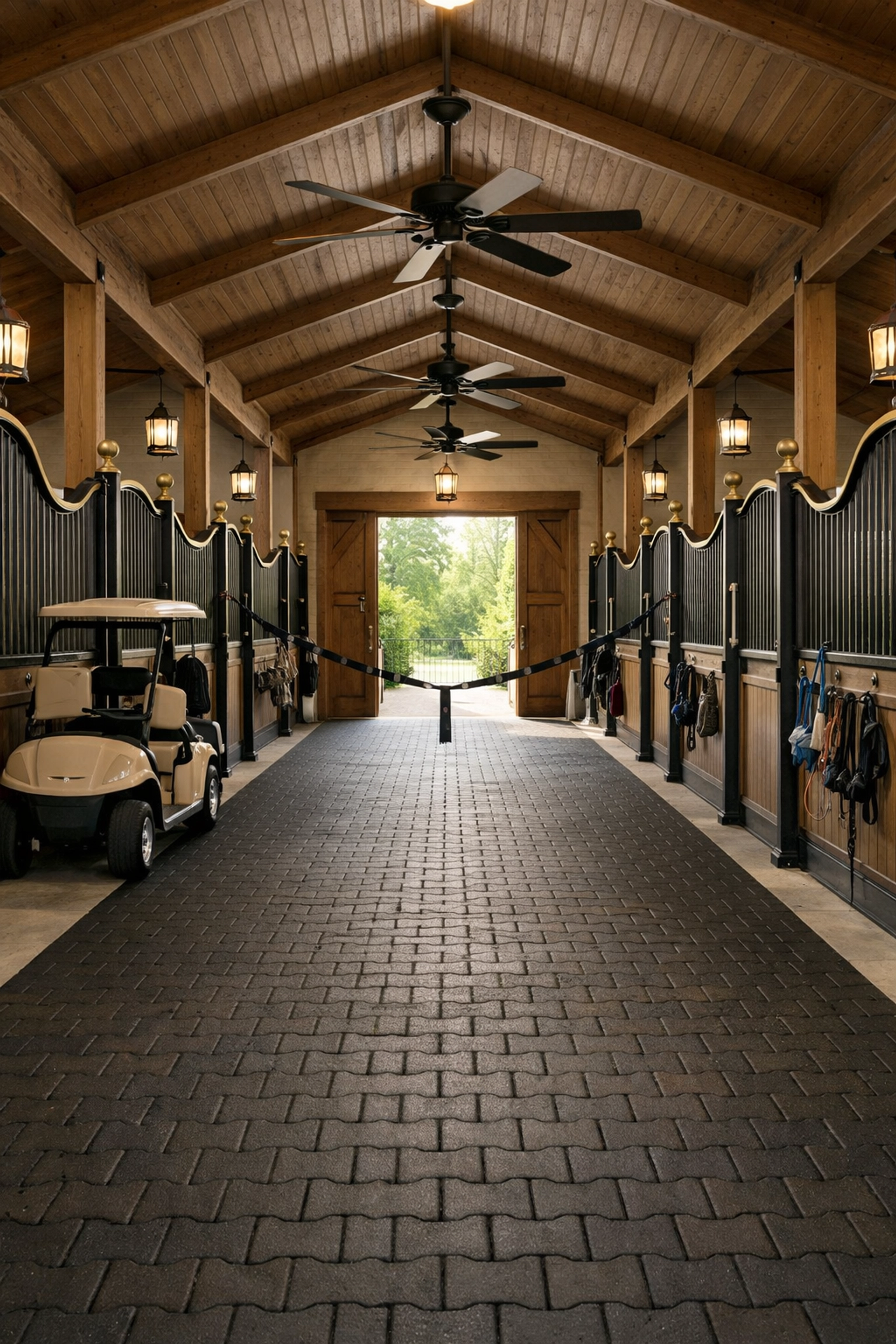
Premium construction includes concrete flooring with textured finish or rubber pavers for secure footing when wet. Proper pitch ensures water flows toward floor drains rather than pooling: a small detail that prevents ice formation in winter and reduces humidity in summer.
Breezeway doors at each end create the natural airflow essential in our climate. These should be oversized (minimum 12 feet wide by 10 feet tall) to accommodate equipment and provide emergency exit routes. Many luxury properties install custom wood or steel doors that complement the overall architectural style while incorporating large windows for light and ventilation.
Climate Control: Managing Carolina Weather
Unlike barns in drier climates, Charlotte-area stables must address high humidity, extreme heat, and occasional winter freezes: sometimes all within the same week.
High-end facilities incorporate multiple ventilation strategies. Ridge vents and cupolas create passive airflow through thermal siphoning. Strategically placed windows and Dutch doors on each stall provide cross-ventilation. Many luxury properties add ceiling fans throughout the breezeway and individual stall fans for horses that ship in for major competitions.
Insulation, while uncommon in older facilities, increasingly appears in new construction targeting the luxury market. Insulated roofing reduces summer heat gain significantly, while insulated walls buffer temperature extremes in both stall areas and climate-controlled spaces like tack rooms and wash racks.
Water Systems Built for Reliability
Serious horse properties require serious water infrastructure. Luxury buyers look for systems that deliver convenience without sacrificing reliability.
Automatic waterers in each stall eliminate the twice-daily bucket routine, but they must be heated models to prevent freezing during Carolina cold snaps. The system should include shut-off valves for each waterer, allowing you to service one without disrupting the entire barn. Frost-free hydrants throughout the property, properly installed below the frost line, provide year-round access for filling troughs, washing horses, and fire safety.
Smart properties include a secondary water source: whether a well dedicated to farm use or a large storage tank: ensuring you can continue caring for horses during municipal supply interruptions.
The Tack Room: Where Function Meets Presentation
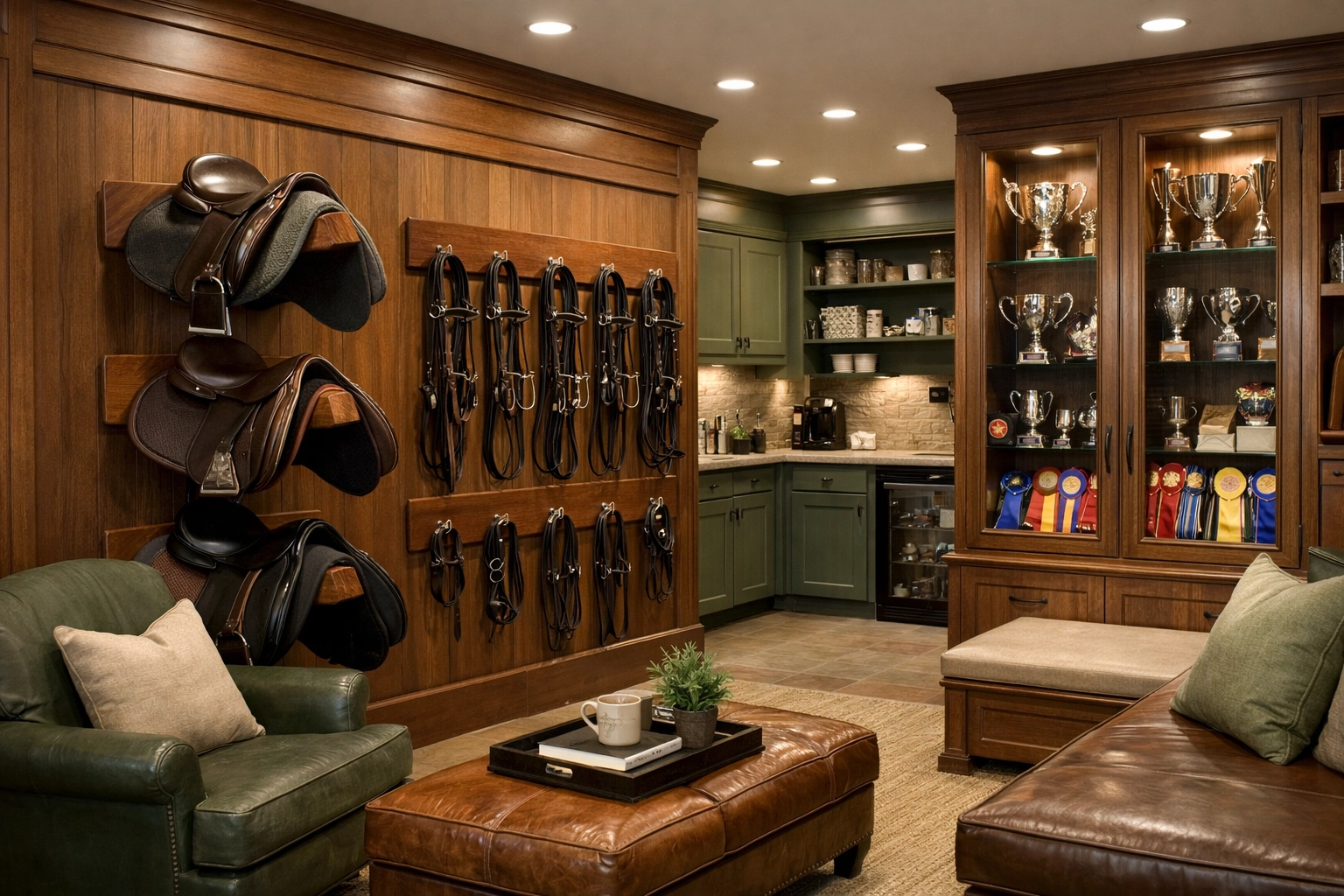
In luxury equestrian properties, the tack room transcends basic storage to become a showcase space that reflects the owner's program and attention to detail.
Climate control protects leather investment. Mini-split systems maintain stable temperature and humidity year-round, preventing mold growth on saddles and extending the life of expensive equipment. Dehumidifiers provide an additional layer of protection during our notoriously humid summers.
Built-in saddle racks, bridle hooks, and blanket bars should be commercial grade, mounted directly to wall studs for security. Glass-front cabinets display awards and special equipment while keeping them dust-free. A dedicated boot room or mudroom entrance prevents dirt tracking into the main tack area.
Luxury facilities often include a small kitchenette for preparing supplements and storing medications, plus dedicated office space with robust WiFi for managing farm operations and staying connected during long barn days.
Wash Racks and Grooming Areas
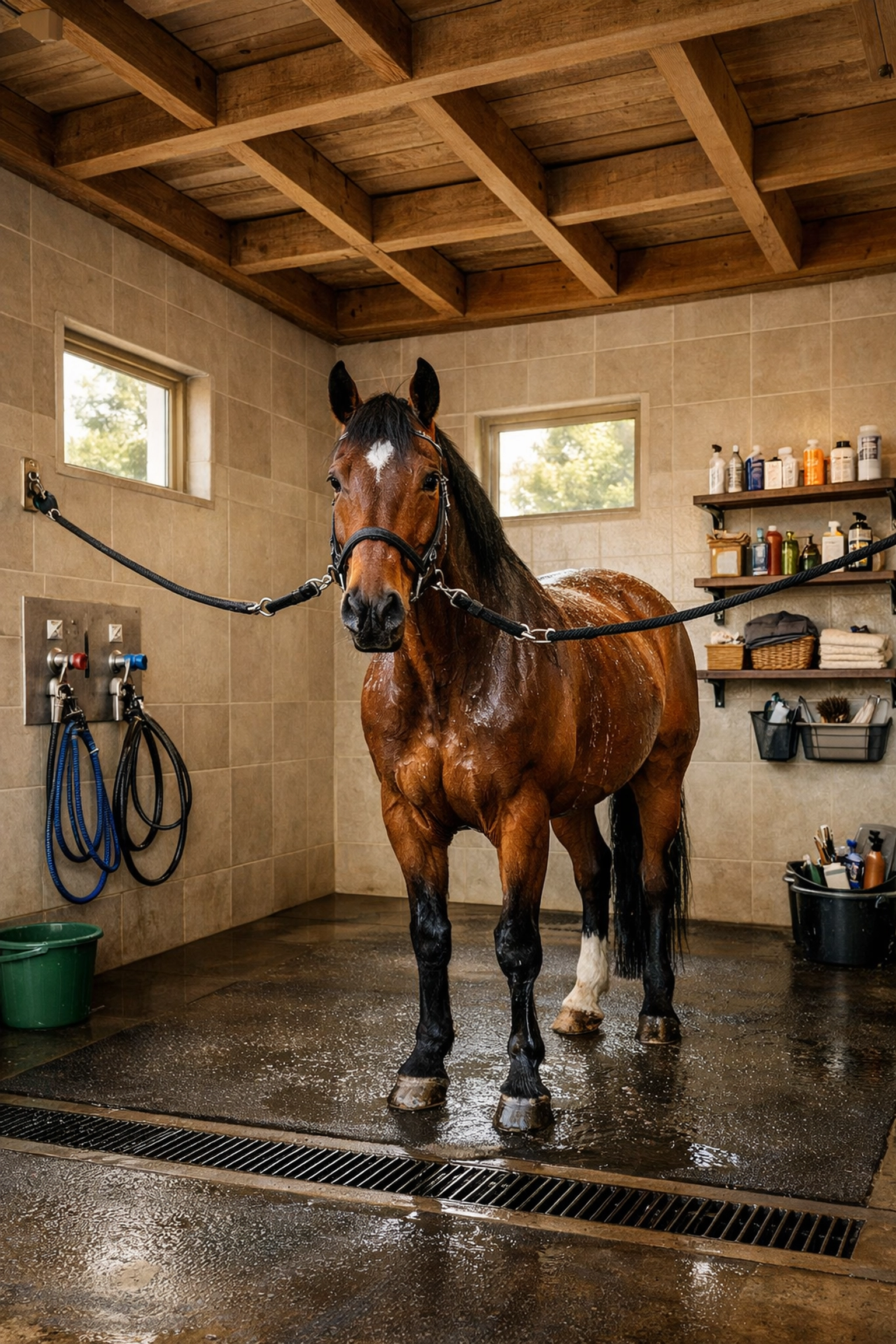
Professional-grade wash racks distinguish high-end facilities from basic boarding barns. Buyers expect heated and cold water, adequate drainage, and finishes that will withstand daily use.
The best wash racks incorporate textured rubber flooring with proper slope to perimeter drains. Walls should be finished with moisture-resistant materials: tile, FRP panels, or sealed concrete: that clean easily and don't harbor bacteria. Overhead clearance must accommodate tall horses, while thoughtful placement of cross-tie rings and utility hooks streamlines the grooming process.
Hot water on demand matters more than many buyers initially realize. Whether bathing a horse after work on a chilly March evening or effectively removing bot eggs in fall, hot water transforms routine care from unpleasant chore to manageable task.
Ancillary Spaces That Complete the Picture
High-end stable design extends beyond stalls and aisles to include the supporting spaces that make daily horse care efficient.
A dedicated feed room with secure rodent-proof bins, adequate lighting, and proximity to the center aisle prevents wasted steps during twice-daily feeding. Many luxury facilities add a small refrigerator for medications and supplements requiring cold storage.
Proper hay and bedding storage under roof protects your investment from weather damage and reduces waste. Calculate approximately 150 square feet per horse for annual hay storage, more if you buy in large quantities when pricing is favorable.
Equipment storage: often overlooked in planning: should accommodate your farm tractor, truck, manure spreader, and arena maintenance equipment under cover. Quality machinery represents significant investment; protecting it from the elements extends its useful life and maintains resale value.
Integration with the Estate
What truly separates luxury equestrian properties from standard horse farms is the thoughtful integration of equestrian facilities with the overall estate design. The stable complex should complement the main residence architecturally, using similar materials, rooflines, and finishing details.
Landscaping softens the transition between formal estate grounds and working farm areas. Strategic placement of trees provides shade for horses while screening views of manure storage or equipment areas from the main house. Fencing should be both functional and attractive: post-and-board or powder-coated steel that enhances curb appeal while providing safety.
Professional lighting design extends the property's usability after dark while maintaining the estate's sophisticated aesthetic. Barn aisle lighting should be bright enough for detailed work, while exterior fixtures illuminate pathways, parking, and paddocks for evening chores and enhanced security.
The Charlotte Market Perspective
The Charlotte metro equestrian market has matured significantly over the past decade. Buyers relocating from established horse regions like Wellington, Ocala, or Aiken arrive with clear expectations shaped by experience with top-tier facilities. They recognize quality construction and thoughtful design details because they've lived with inferior systems and dealt with the resulting frustrations.
Communities like Cheval in south Charlotte have raised the bar for integrated equestrian living, demonstrating that serious riders need not choose between luxury residential amenities and professional-grade horse facilities. This shift influences buyer expectations across the broader market, from Mooresville to Tryon.
Working with buyers focused on properties in Waxhaw, Weddington, and Marvin, we consistently hear that they're seeking facilities that will still meet their needs in ten or fifteen years: not starter setups they'll immediately need to renovate. This long-term perspective drives investment in proper design and quality construction from the outset.
Moving Forward with Your Vision
Creating or finding a luxury equestrian property that truly meets your program's needs requires understanding both horse management fundamentals and the specific considerations of our Carolina climate and market. The details matter: from drainage to door hardware: because they determine whether you'll love your daily barn routine or constantly battle frustration.
If you're searching for a property that gets these details right or planning to develop your own luxury equestrian estate, we'd welcome the conversation. Our team lives this lifestyle daily and understands the difference between facilities that look impressive in photos and those that function flawlessly through years of hard use.
The best equestrian properties blend horse-first design with the refined finishes and integrated estate planning that luxury buyers expect. When these elements align, you create not just a place to keep horses, but a home that truly supports the equestrian lifestyle at the highest level.

