

Twenty minutes south of Charlotte, Waxhaw has quietly earned its reputation as one of the region's most desirable equestrian communities. This isn't accidental. The combination of quality soil, established horse culture, and accessible acreage creates the foundation every serious horseperson needs: whether you're running a training operation, breeding program, or building a private sanctuary for your string.
Understanding the Waxhaw market means looking beyond listing photos. It requires knowledge of what actually works for horses in the North Carolina Piedmont, where to find the infrastructure that saves you years of development costs, and how to identify properties with long-term operational value.
The Waxhaw Equestrian Market: Current Landscape
The numbers tell a clear story. Waxhaw currently offers 17 active equestrian property listings with an average price of $539,000 and land costs averaging $50,005 per acre. This positions the area at a competitive price point compared to more northern Charlotte suburbs while maintaining superior acreage options.
Property inventory ranges from turnkey operations to development opportunities, with listings spanning $295,000 to $1,500,000. The majority of well-appointed farms with existing infrastructure fall between $390,000 and $620,000, making Waxhaw accessible for first-time farm buyers and experienced operators alike.
What distinguishes this market is consistency. Unlike areas experiencing rapid residential conversion, Waxhaw maintains agricultural zoning protections and a community commitment to preserving horse country character. This stability protects your investment and ensures your neighbors understand farm operations.
Why Waxhaw Works for Equestrians
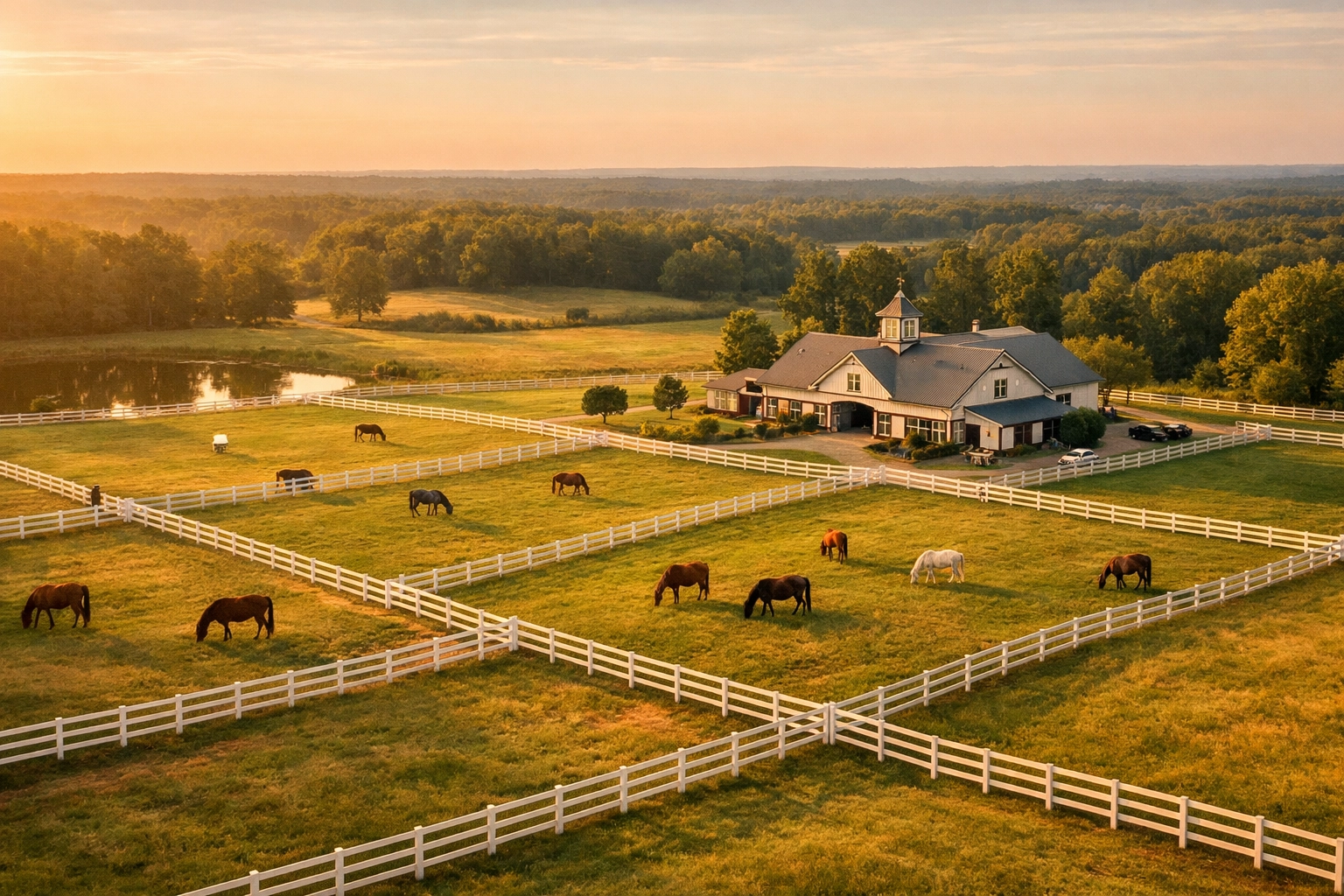
The practical advantages start with geography. Waxhaw sits in Union County, where zoning regulations favor agricultural use and county services understand equestrian needs. You're not fighting uphill battles with neighbors who moved to the country but don't want to see horses or smell a manure pile.
Soil quality in this region supports healthy pasture development. The clay-based Piedmont soils drain adequately with proper management while retaining enough moisture to sustain year-round grazing programs. This matters when you're calculating hay costs and pasture rotation schedules.
Trail access sets Waxhaw apart from comparable markets. The Mineral Springs Greenway connects to an expanding trail network, while Cane Creek Park offers 1,100 acres of riding terrain with maintained bridle paths. Having public trail access within a short trailer ride eliminates the isolation many rural farms face and provides conditioning options beyond arena work.
The equestrian community here is established but not insular. You'll find eventers, dressage riders, hunter/jumper programs, and western disciplines all represented. This diversity supports local trainers, farriers, vets, and feed stores: the service infrastructure that makes daily horse management feasible.
Property Types and Investment Ranges
Understanding what your budget delivers helps narrow the search efficiently.
$295,000 – $450,000 typically secures 5-10 acres with basic improvements. Expect a modest barn (4-6 stalls), run-in shelters, and established fencing. These properties work well for private owners with small strings or buyers willing to add infrastructure over time. The land quality at this price point remains solid: you're sacrificing amenities, not acreage integrity.
$450,000 – $700,000 opens access to turnkey operations. Properties in this range often include purpose-built barns with 6-9 stalls, dedicated tack and feed rooms, hot/cold water systems, and at least one quality arena (typically 100×150 feet or larger). Pasture configuration shows thoughtful planning with multiple paddocks supporting rotational grazing. Equipment storage and hay barns frequently accompany these farms.
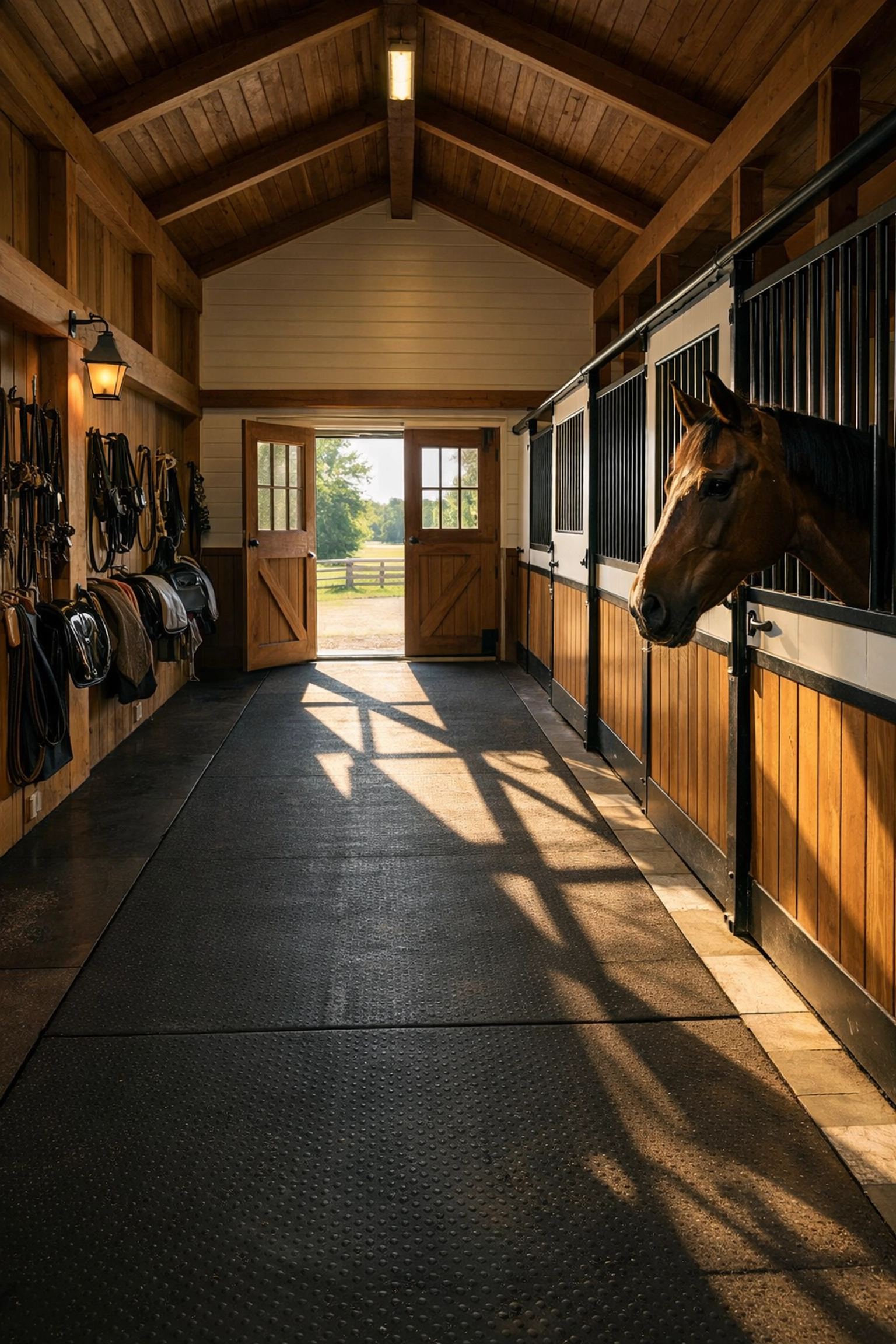
$700,000 – $1,500,000 represents premium equestrian estates. Expect 20+ acres, indoor or covered arenas, multiple barn complexes, and residential quality that matches the equestrian infrastructure. These properties suit professional training operations, breeding programs, or buyers who want entertaining space alongside serious horse facilities.
Essential Infrastructure: What Actually Matters
Walk properties with a practical eye. Attractive paint colors fade; proper drainage and functional barn layouts determine your daily quality of life.
Barn design should prioritize ventilation, natural light, and efficient workflow. South-facing shed row barns with 12×12 stalls, Dutch doors, and protected grooming areas represent the gold standard. Center-aisle designs work but require more square footage and heating considerations for North Carolina's climate.
Interior features that separate functional barns from renovation projects include:
- Rubber matted aisles and stalls
- Hot and cold water with freeze-proof hydrants
- Dedicated wash stall with proper drainage
- Tack room with climate control capabilities
- Feed room with rodent-proof storage
- Direct arena access reducing daily trailering
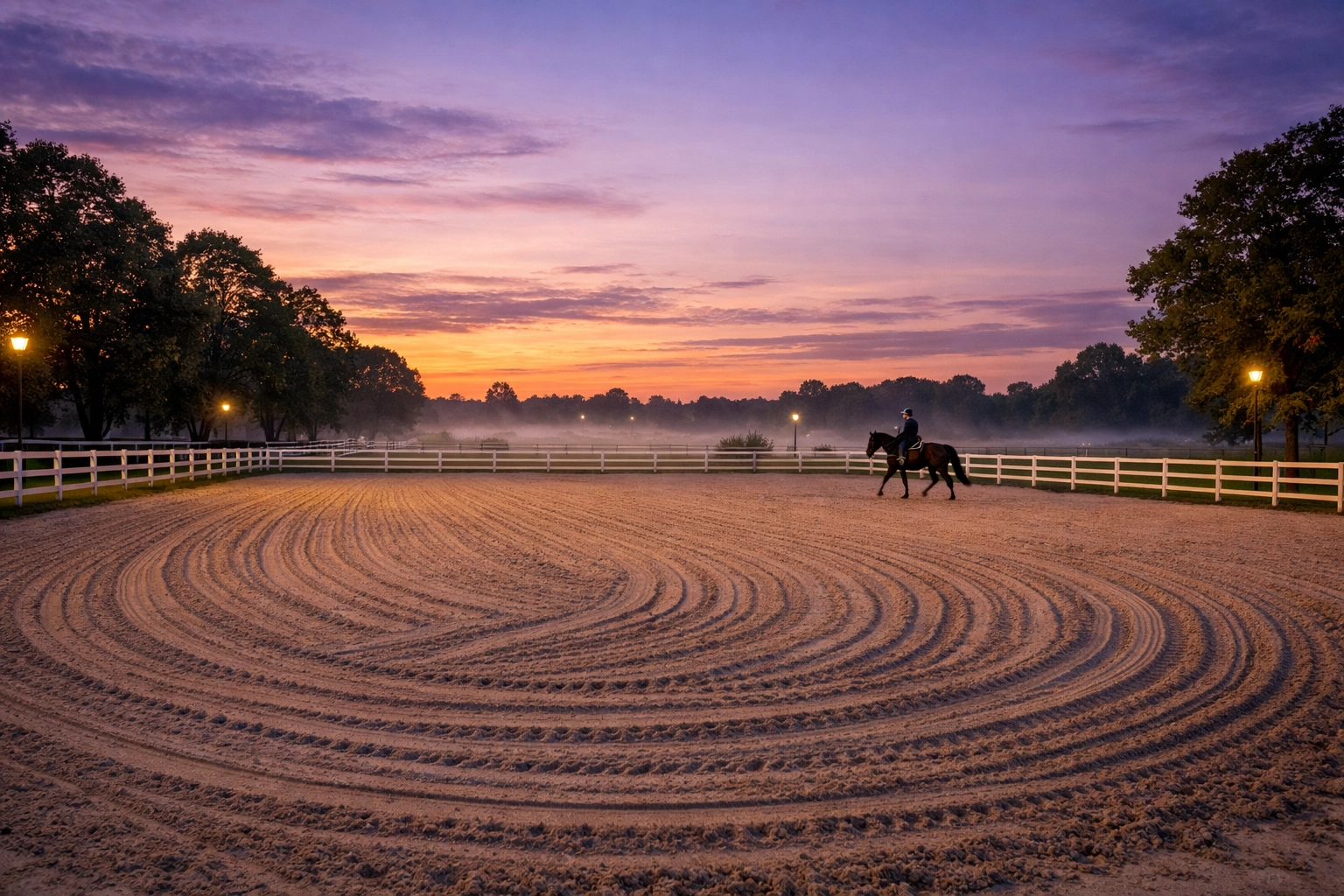
Arena quality impacts usability more than size. A well-maintained 50×125 arena with proper footing outperforms a 150×200 space with drainage problems and uneven surfaces. Evaluate base construction, footing depth, and drainage patterns. Sprinkler systems indicate an owner who maintained the arena seriously.
Fencing condition reveals overall property maintenance philosophy. Budget $8-12 per linear foot for quality board fencing replacement. Wire fencing costs less but requires vigilant maintenance to prevent injury. Properties with vinyl or coated wire demonstrate owners who prioritized long-term durability over initial costs.
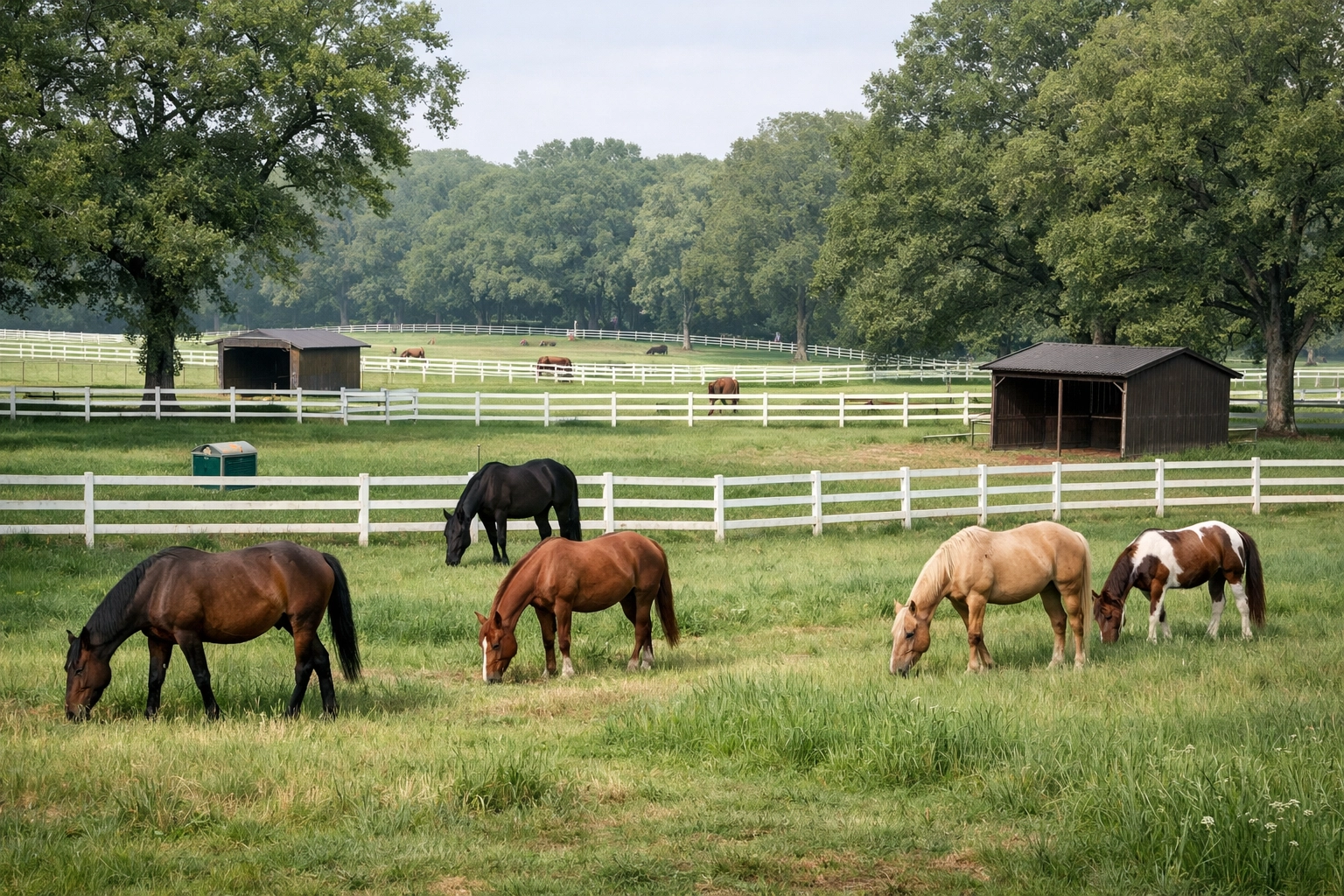
Pasture configuration should support your management style. Look for:
- Multiple paddocks enabling rotation
- Adequate shade (natural or constructed)
- Water access in each grazing area
- Gates positioned for efficient movement
- Separation areas for new horses or breeding operations
Location Benefits Beyond the Barn
Waxhaw's position provides practical advantages that become more valuable over time. You're 20 minutes from Charlotte's southern suburbs for shopping, medical care, and business needs, yet far enough that development pressure remains manageable.
Downtown Waxhaw maintains authentic character: locally-owned restaurants, farm supply stores, and community spaces built around agricultural heritage rather than manufactured atmosphere. This matters when you need a farrier recommendation or want to grab dinner without driving forty minutes.
The school system ranks consistently well, important for families balancing equestrian lifestyles with children's education. Union County schools understand farm schedules and many students participate in 4-H and FFA programs.
Veterinary access includes both routine care providers and emergency services within reasonable distances. When you're dealing with colic at 2 AM, proximity to specialized equine hospitals becomes critical.
Making Your Decision: Practical Considerations
Successful farm purchases require looking beyond individual property features to operational reality.
Water availability varies across Union County. Confirm well capacity and water quality before committing. Properties on municipal water eliminate concerns but may carry higher monthly costs for farm operations.
Septic systems on older properties may need evaluation or upgrading, particularly if you're planning guest facilities or employee housing. Budget accordingly.
Property taxes in Union County remain reasonable compared to Mecklenburg, but verify current agricultural exemption status. Working farms qualify for preferential assessment reducing annual tax burden substantially.
Access and road frontage impact both daily convenience and future marketability. Properties requiring long private drives need maintenance budgets for grading and gravel. Paved road frontage adds value but isn't essential for private operations.
Your Next Steps
Waxhaw's equestrian market rewards informed buyers. The inventory exists, the infrastructure is here, and the community supports horse operations at every level. Success comes from understanding what your program actually needs, evaluating properties with operational perspective, and moving decisively when you find the right match.
The best farms don't linger on the market. Properties with solid infrastructure, quality land, and turnkey readiness attract multiple qualified buyers quickly. Having your financing arranged and decision criteria established positions you to act when opportunity appears.
If you're ready to explore equestrian properties in the Charlotte area, start with clear priorities: acreage requirements, essential facilities, location preferences, and realistic budget parameters. The right farm is here: finding it requires knowing exactly what you're looking for and why it matters to your horses.
Waxhaw isn't trying to be anything other than what it is: functional horse country with the infrastructure to support serious equestrian operations and the community to make rural living sustainable. For buyers who understand what that means, it's exactly enough.

