

Why Waxhaw Continues to Draw Serious Equestrians
Waxhaw sits at the intersection of Old South charm and modern equestrian infrastructure. Located just 25 minutes south of Charlotte, this Union County town has preserved its agricultural character while building the amenities serious horse people need, quality veterinarians, feed suppliers, farriers, and a network of horse families who understand that turnout schedules and feed routines aren't just preferences, they're non-negotiables.
The soil drains well. The terrain offers gentle rolls without the erosion headaches of steeper properties. Zoning remains horse-friendly. These aren't selling points, they're the foundational realities that make Waxhaw work for horses first, which is exactly how it should be.
Current Market Snapshot: What You're Working With
The Waxhaw equestrian market currently offers 17 to 45 active listings depending on property size and classification, with inventory that shifts seasonally but maintains consistent availability year-round. The average listing price sits around $539,000, translating to approximately $50,005 per acre: a crucial metric when you're calculating pasture rotation capacity and long-term property value.
Properties span from $295,000 for smaller acreage parcels to estates exceeding $1.5 million for turnkey facilities with extensive improvements. The sweet spot for most buyers falls between $500,000 and $850,000, where you'll find functional horse operations with 5-15 acres, established barns, and homes that don't require immediate renovation.
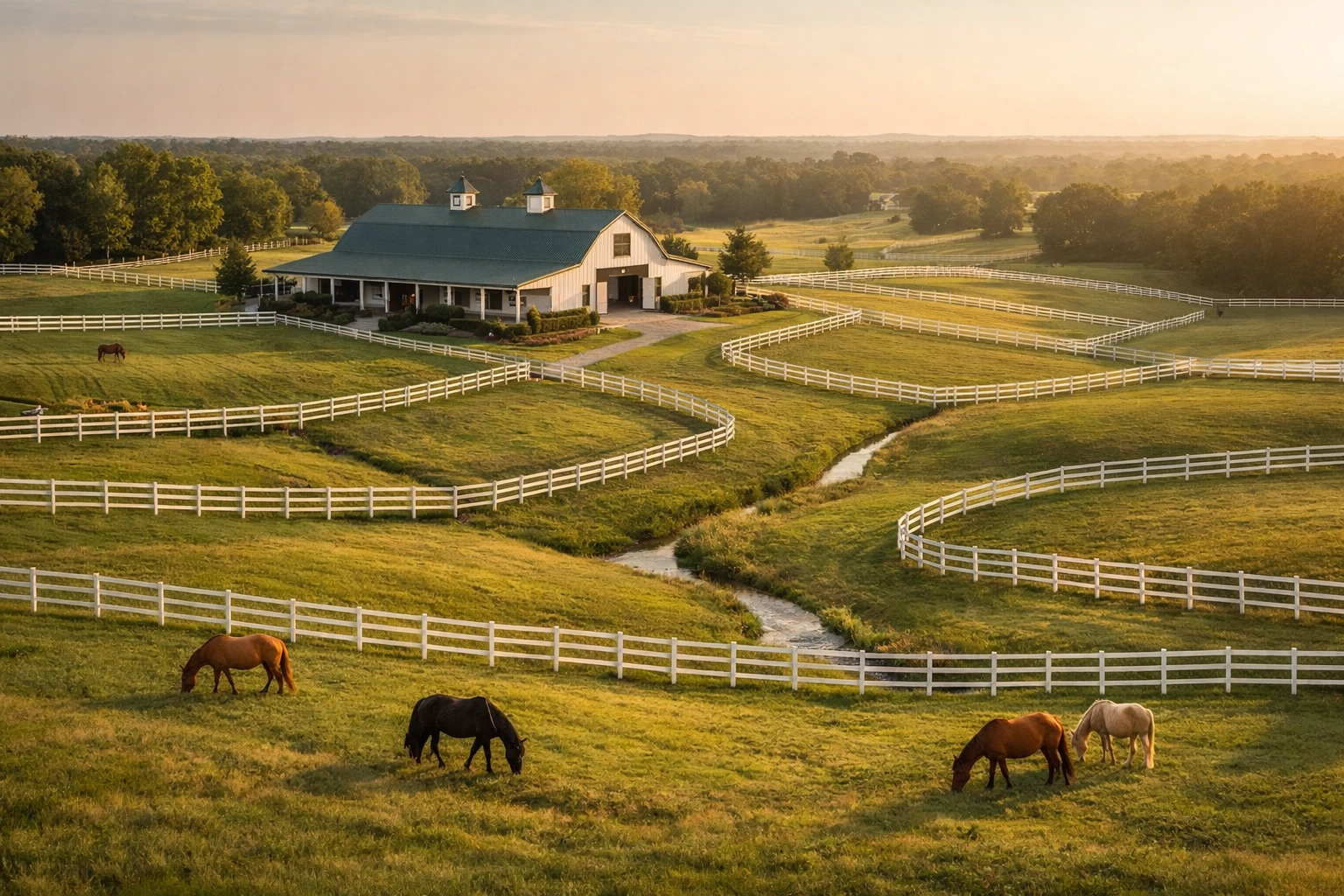
The median days on market hovers around 52 days, which tells you something important: properties move when they're priced correctly and present well. This isn't a market where overpriced farms linger for six months. Buyers here know what quality infrastructure costs, and sellers who understand that reality sell faster.
What Serious Equestrian Properties Include
Cookie-cutter suburban homes get generic amenities. Horse farms require specific infrastructure that directly impacts your daily operation and your horses' wellbeing.
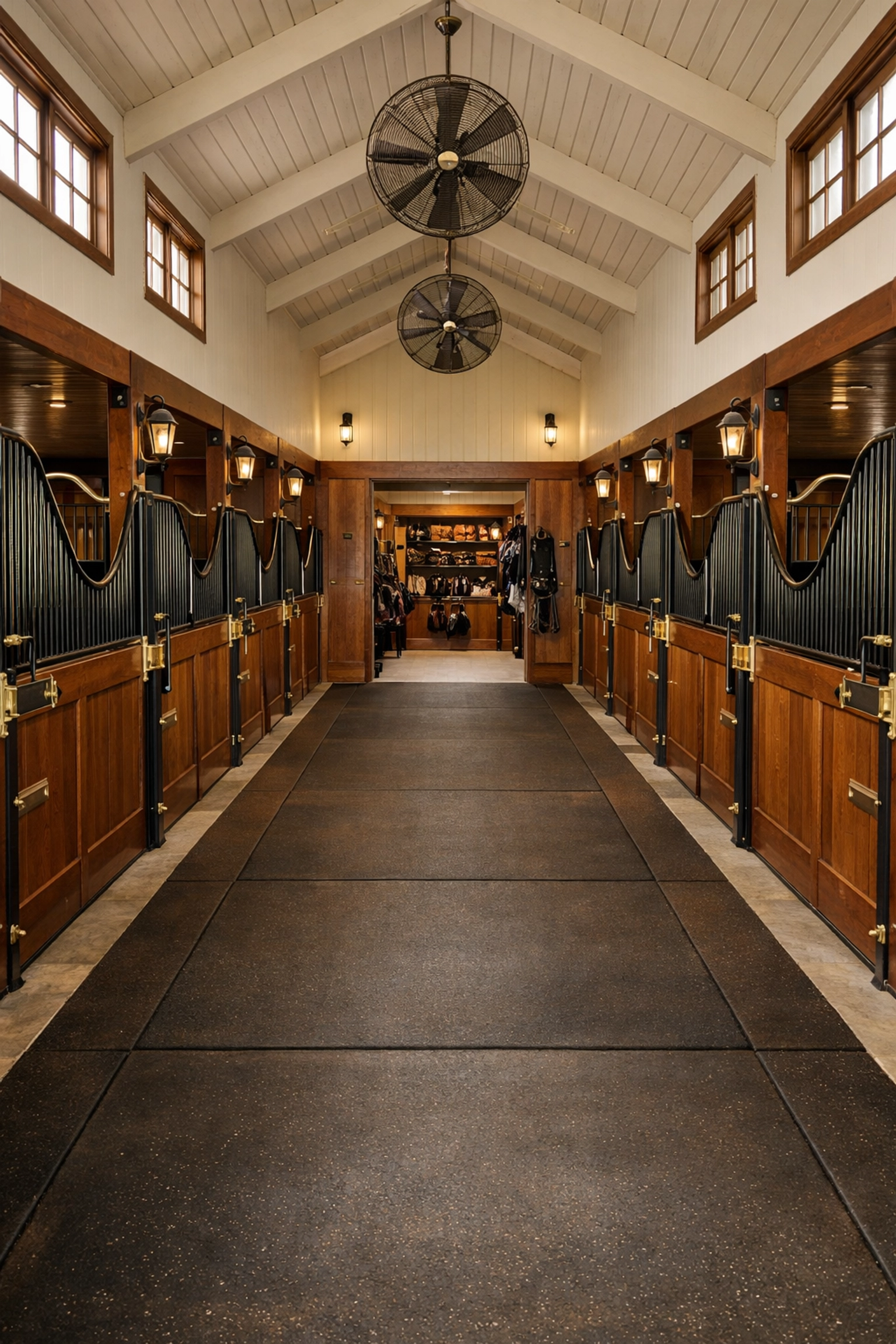
Barn facilities in Waxhaw typically feature 6-12 stalls with proper ventilation: fans in summer, good air exchange in winter without creating drafts that lead to respiratory issues. Look for center-aisle designs with 12×12 stalls minimum, concrete or rubber-matted aisles for easy cleaning, and dedicated tack rooms with climate control to protect leather from humidity.
Tack rooms should offer more than a closet with hooks. Proper facilities include saddle racks positioned to prevent tree warping, bridle brackets that maintain shape, and enough space to organize grooming supplies, blankets, and medical supplies with clear visibility and access.
Feed rooms need rodent-proof storage with adequate volume for bulk purchasing: buying feed in quantity saves money and reduces delivery frequency. Proper rooms include separate bins for different feed types, supplement storage, and easy access for delivery trucks.
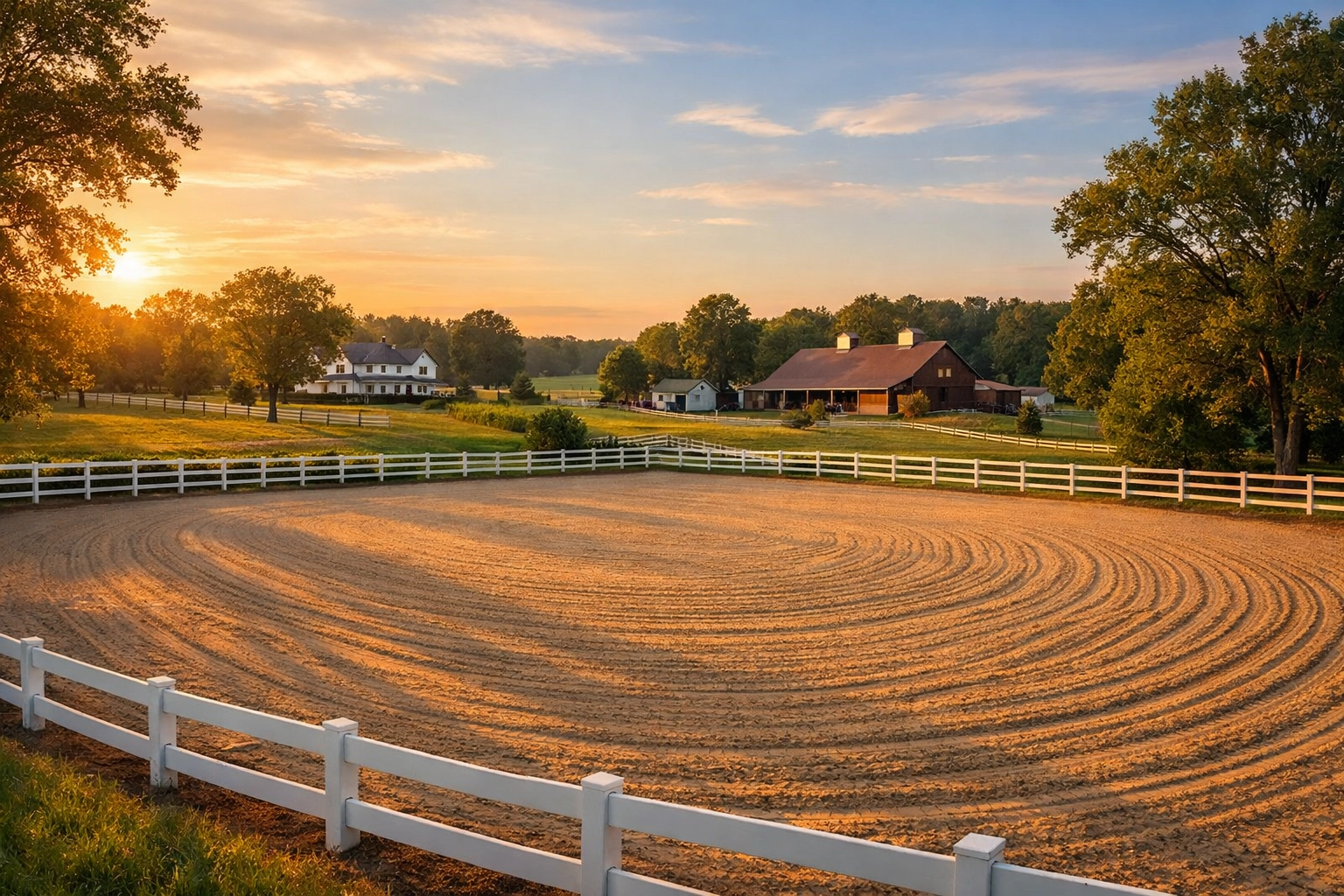
Riding arenas range from 100×150 outdoor spaces with quality footing to covered or indoor facilities that extend your riding season through summer heat and winter weather. The footing material matters more than the size: proper drainage and consistent depth prevent injuries and reduce maintenance costs. Round pens complement arena work, particularly valuable for starting young horses or rehabbing injuries with controlled movement.
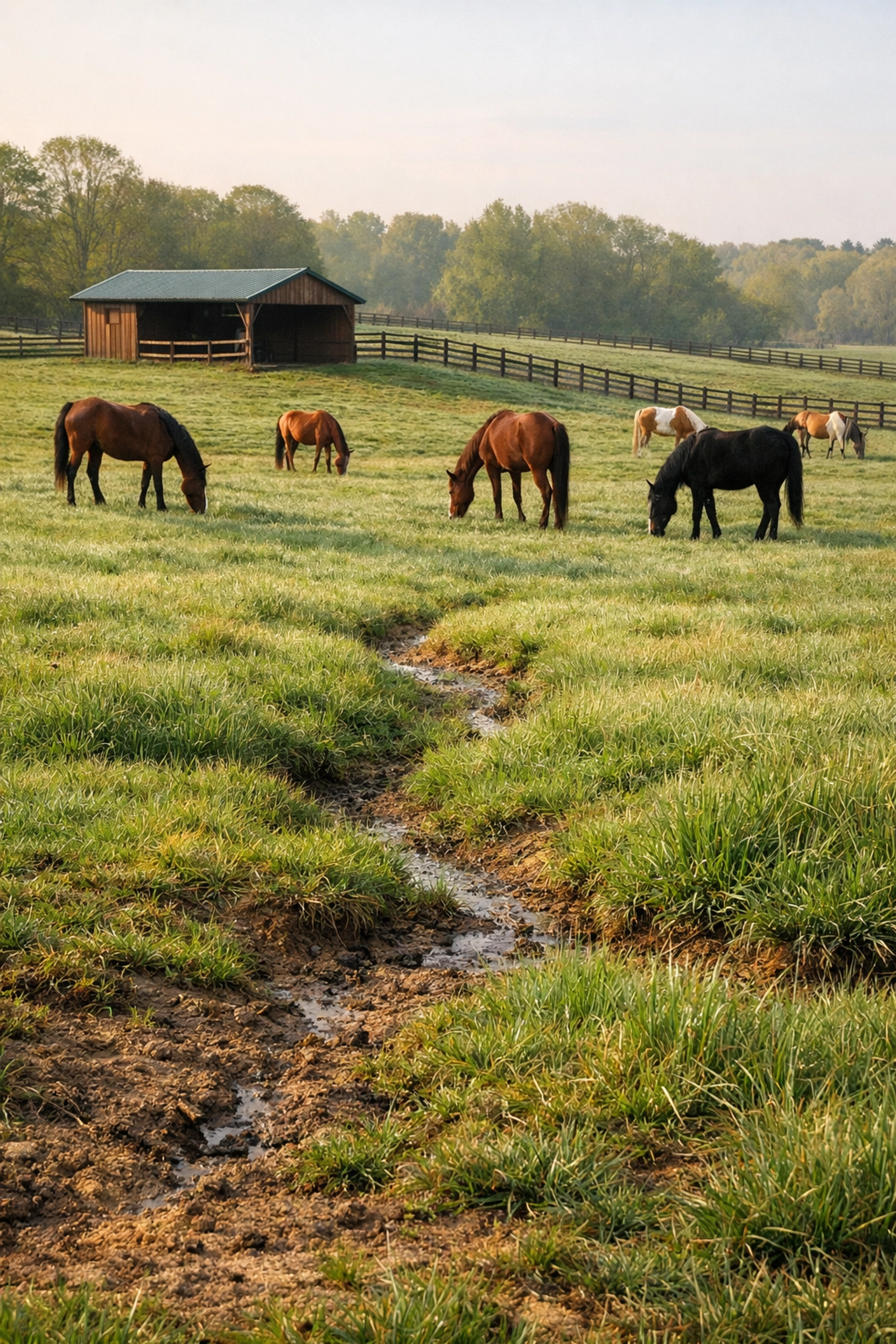
Pasture infrastructure determines whether you're managing horses or constantly managing problems. Look for well-maintained fencing (board fence, diamond mesh, or quality electric), adequate acreage for rotation grazing (typically 1.5-2 acres per horse with proper management), and established run-in sheds or loafing sheds positioned for natural drainage.
Water systems need to function reliably: automatic waterers reduce labor but require proper winter preparation, while tank systems offer simplicity with more frequent maintenance requirements. Both hot and cold water access to the barn isn't luxury; it's essential for efficient daily operation and emergency care.
Land Quality and Infrastructure Considerations
The property underneath the improvements determines your long-term success more than the barn paint color.
Soil composition in Waxhaw generally features clay-based soils with decent drainage when properly managed. This creates good bone-building minerals for growing horses while requiring attention to prevent compaction in high-traffic areas. Test soil before purchase to understand pH levels, nutrient availability, and any amendments needed for productive pastures.
Topography should work with water, not against it. Gentle slopes provide natural drainage away from barn areas and prevent standing water that breeds parasites and creates hoof problems. Properties with significant elevation changes look dramatic but often require extensive erosion control and create maintenance challenges that consume time and budget.
Access and infrastructure extend beyond the property line. Evaluate road access for large trailers and delivery trucks, electric service capacity for barn operations and arena lighting, and well water quality and flow rate. Municipal water access provides convenience but adds monthly costs; well systems require maintenance but offer independence.
Residential Considerations That Matter
The house matters, but it's not why you're buying the property. Still, you'll live there, and practical considerations impact daily quality of life.
Most Waxhaw horse properties include 3-4 bedroom homes with 2,000-3,500 square feet: sufficient space for family living without the overhead of maintaining estate-sized residences. Many feature main-floor owner suites, useful when early morning feeding schedules start before dawn regardless of weather.
Sight lines to the barn from the house aren't negotiable for many owners. Being able to visually check horses during foaling season, monitor turnout, or simply watch your horses from the kitchen window adds immeasurable value to daily life that no square footage calculation captures.
Outdoor living spaces matter in the Carolina climate. Covered porches provide year-round usability, essential when you're pulling boots on and off multiple times daily or need covered space to store equipment temporarily.
Price-to-Value Analysis: Making Smart Investment Decisions
Understanding value requires looking beyond listing price to infrastructure replacement costs and land appreciation potential.
A 9-stall barn with proper construction, electric, and water systems costs $150,000-$300,000+ to build new, depending on finish level and amenities. An established, well-maintained barn represents significant embedded value that new construction timelines can't replicate.
Arena construction with proper base, footing, and drainage runs $25,000-$75,000 for outdoor facilities, significantly more for covered or indoor options. Replacing deteriorated footing costs nearly as much as building new, making existing facilities with good maintenance history valuable.
Fencing costs approximately $3-$8 per linear foot depending on material choice. A 10-acre property requires substantial fencing investment: 1,000+ feet of perimeter fence plus cross-fencing for pasture rotation. Established, well-maintained fencing represents another significant embedded value.
Properties priced at $50,000+ per acre in Waxhaw reflect these infrastructure investments. Comparing raw land costs to improved equestrian properties requires accounting for improvement expenses that would take 12-24 months to complete even with available capital and contractors.
Working With Specialized Equestrian Representation
Residential real estate agents understand houses. Equestrian property specialists understand the infrastructure that makes horse operations functional versus frustrating.
The difference emerges in subtle details: recognizing that barn placement relative to prevailing winds affects daily ammonia exposure and respiratory health, understanding that arena footing type impacts soundness and training effectiveness, knowing which well flow rates support multiple automatic waterers during summer heat.
At Carolina Horse Farm Realty, we evaluate properties through the lens of daily horse management first. We notice deficient drainage before it creates abscess outbreaks, identify electrical service limitations before they prevent indoor arena lighting, and recognize soil conditions that affect pasture productivity and long-term land value.
This isn't sales expertise: it's horse management experience applied to property evaluation. The questions we ask during property tours reflect the same considerations you face at 6 AM when the farrier's running late and the feed delivery schedule changed.
Location Context: Waxhaw's Equestrian Ecosystem
Properties exist within communities, and Waxhaw's equestrian community provides the support network that turns property ownership into sustainable horse keeping.
Multiple quality veterinary practices serve the area with both routine and emergency capabilities. Feed stores stock premium options beyond basic production feeds. Farriers maintain reasonable scheduling: critical when you're managing multiple horses with different shoeing cycles. Local trainers, riding instructors, and equine bodywork professionals create a service network that keeps horses sound and progressing.
The competition scene offers everything from local schooling shows to recognized events, allowing riders to compete without trailering hours each direction. Public trail access remains limited, but private networks and nearby facilities provide options for conditioning and variety beyond arena work.
Moving Forward With Clear Intention
Purchasing an equestrian property requires different evaluation criteria than residential real estate. You're not buying investment potential measured in comparable sales and appreciation projections: you're buying daily infrastructure that either supports your horses' wellbeing or creates constant management problems.
The right Waxhaw property balances functional horse infrastructure with reasonable home amenities, set on land that drains properly and supports productive pastures, located within a community that understands horses aren't livestock or pets: they're athletes and partners requiring specific care and management.
If you're ready to evaluate Waxhaw properties through that lens, we can help you separate marketing language from functional reality. View current listings or reach out directly to discuss what specific features and infrastructure your operation requires. We'll focus on finding property that works for your horses first, which is exactly how the process should go.

