

The equestrian real estate market in Charlotte is experiencing a quiet revolution. Property buyers are increasingly asking about water management systems, energy-efficient barn designs, and pasture restoration programs. What was once considered "nice to have" has become a primary selling point that can add significant value to your investment.
Sustainable Equestrian Estates Deliver 23% Higher Resale Values
Recent market analysis shows that Charlotte-area equestrian properties with verified sustainable features command premium pricing and sell 40% faster than traditional horse farms. These aren't just environmental feel-good measures: they're smart business decisions that protect your investment while creating healthier environments for your horses.
The numbers speak clearly: sustainable equestrian estates in the Charlotte region have shown consistent appreciation even during market downturns, with buyers specifically seeking properties that demonstrate long-term environmental stewardship and reduced operational costs.
What Actually Makes an Equestrian Estate "Sustainable"
Sustainable equestrian design goes far beyond solar panels and rain barrels. True sustainability in horse properties integrates land management, water conservation, energy efficiency, and animal welfare into a cohesive system that reduces environmental impact while enhancing property value.
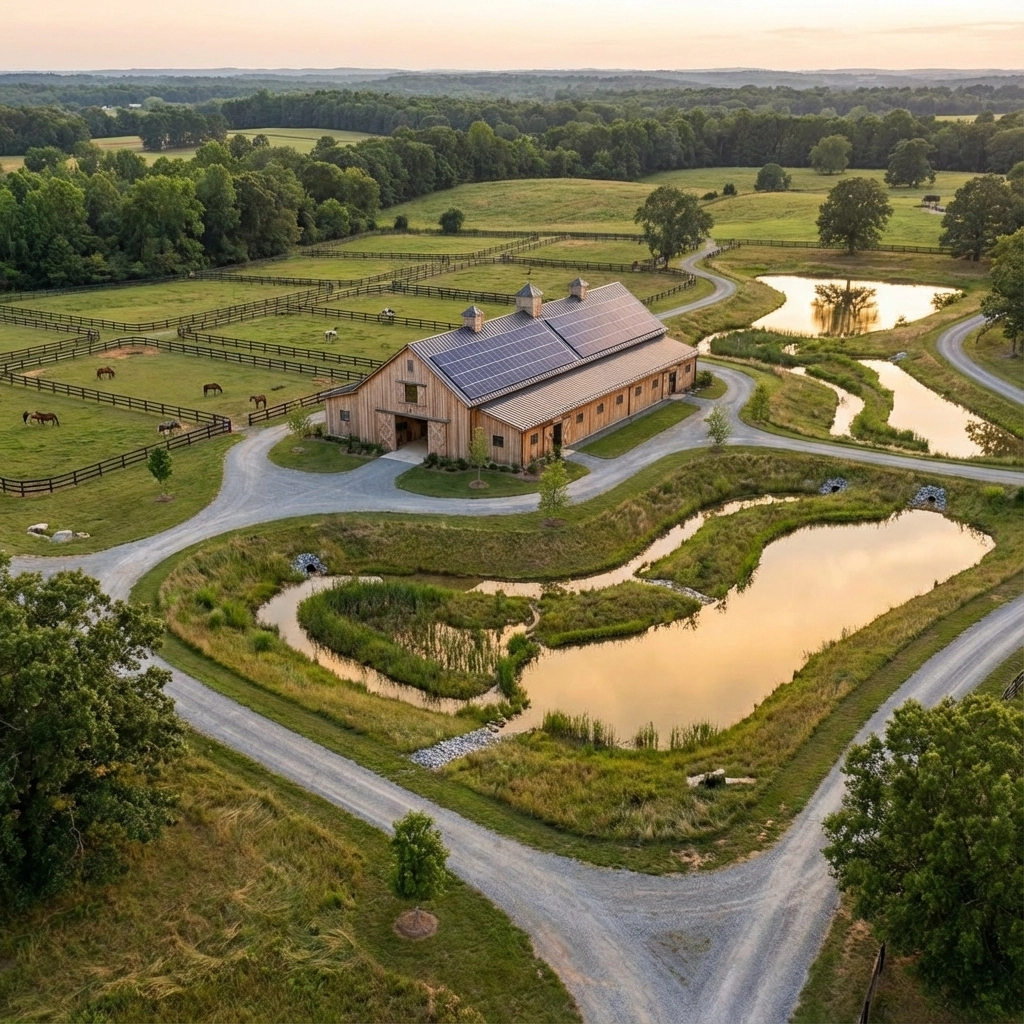
Water Management Systems form the foundation of sustainable equestrian properties. This includes rainwater harvesting for barn use, constructed wetlands for runoff filtration, and strategically placed retention ponds that prevent erosion while providing natural irrigation for pastures.
Rotational Grazing Infrastructure allows horses to graze systematically across multiple paddocks, preventing overgrazing and soil compaction. Properties with permanent fencing systems designed for rotation show healthier pastures, reduced feed costs, and improved soil quality over time.
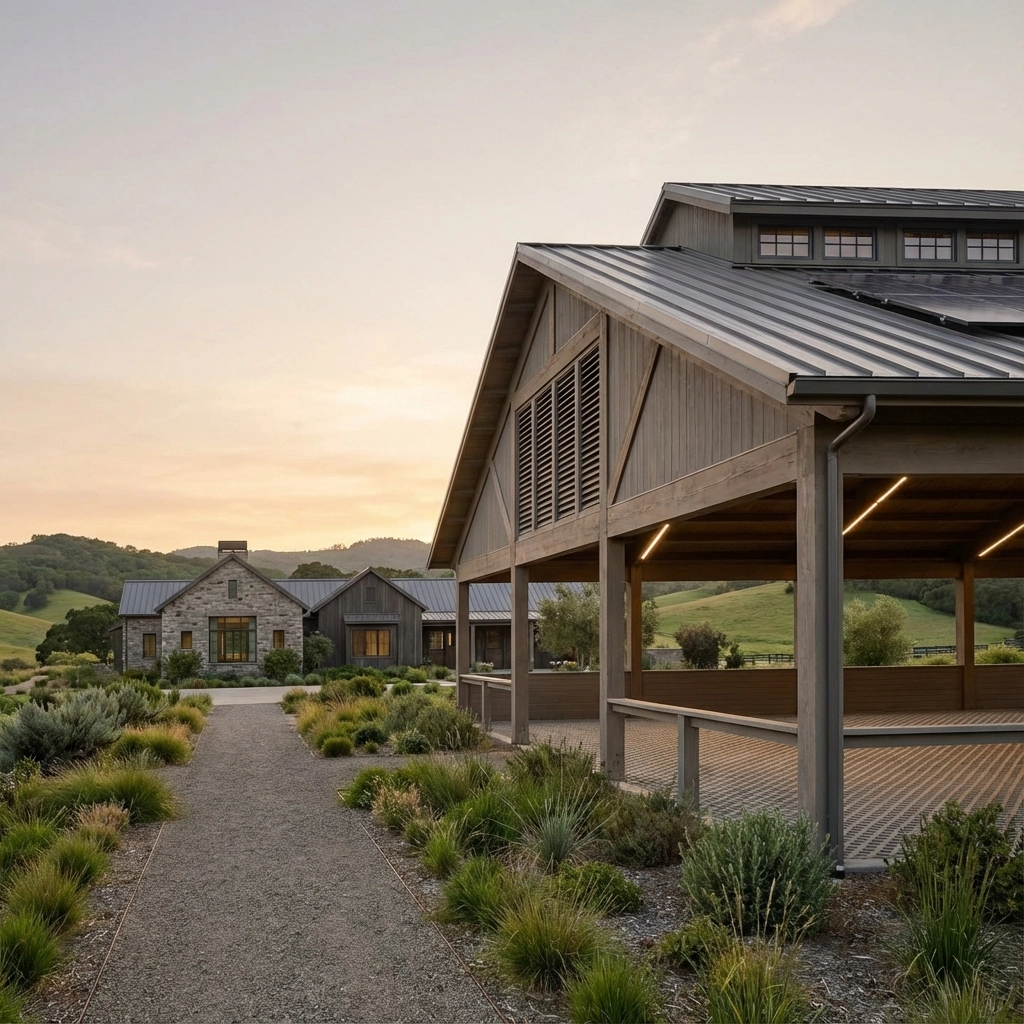
Energy-Efficient Barn Design incorporates natural ventilation systems, LED lighting with motion sensors, and insulation that maintains comfortable temperatures without excessive heating or cooling costs. These features create healthier environments for horses while dramatically reducing utility expenses.
Your Horses Actually Perform Better on Sustainable Properties
The correlation between sustainable land management and horse health isn't coincidental. Horses evolved as grazing animals that thrived in diverse, well-managed ecosystems. Sustainable equestrian properties recreate these conditions through thoughtful design and management practices.
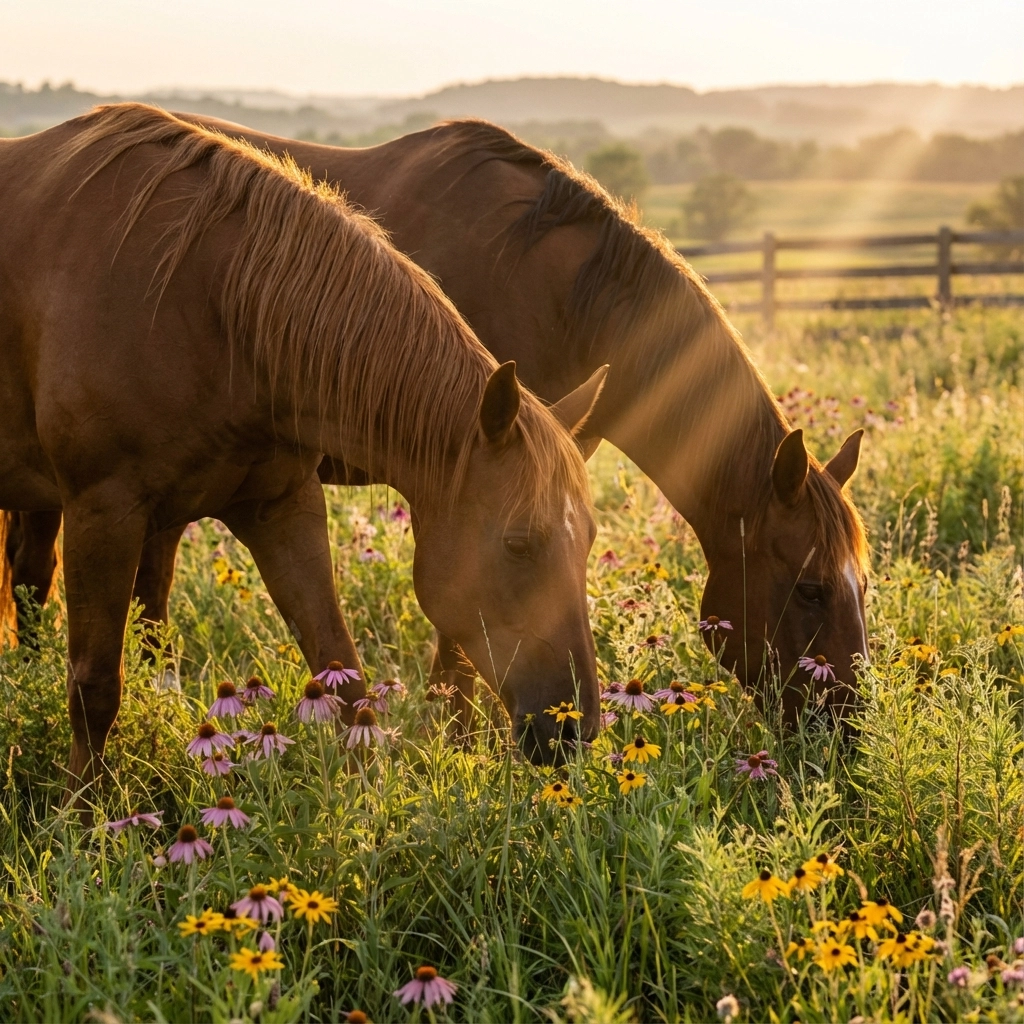
Pasture Diversity Programs incorporate native plant species that provide natural nutrition supplements, reducing the need for commercial feeds and supplements. Horses on diverse pastures show improved coat quality, better digestive health, and enhanced immune system function.
Natural Drainage Systems prevent the muddy, bacteria-rich conditions that lead to hoof problems and respiratory issues. Properties with properly designed drainage maintain dry, stable footing year-round without requiring constant maintenance or expensive drainage solutions.
Integrated Pest Management reduces chemical exposure while maintaining effective fly and parasite control. This approach combines beneficial insects, strategic manure management, and targeted treatments to create healthier environments for both horses and humans.
Charlotte's Geographic Advantages Create Natural Sustainability Opportunities
The Charlotte region's rolling terrain, clay-based soils, and moderate climate provide unique advantages for sustainable equestrian property development. Understanding these natural features allows property owners to work with the land rather than against it.
Natural Slope Management in Charlotte properties allows for gravity-fed water systems and natural drainage patterns that require minimal intervention. Properties that leverage existing topography reduce long-term maintenance costs while preventing erosion and water quality issues.
Native Plant Communities in the Charlotte area include nutrient-rich grasses that support horse health while requiring minimal irrigation or fertilization. Estates that preserve and enhance native vegetation create self-sustaining ecosystems that improve with minimal human intervention.
Year-Round Growing Seasons enable property owners to maintain productive pastures with strategic overseeding and rotation programs. This extended growing season reduces hay costs and provides consistent nutrition for horses throughout most of the year.
Investment Returns That Make Financial Sense
Sustainable features in equestrian properties aren't just environmental statements: they're strategic investments that deliver measurable returns through reduced operating costs and enhanced property values.
Operational Cost Reductions from sustainable systems typically recover initial investments within 3-5 years. Water management systems reduce utility costs by 40-60%, while energy-efficient barn designs cut electricity expenses by 30-50%. These savings compound annually, creating significant long-term value.
Insurance Premium Benefits are increasingly available for properties with verified sustainable features. Many insurance providers offer reduced rates for properties with water management systems, fire-resistant landscaping, and energy-efficient buildings that reduce risk exposure.
Tax Incentive Programs at both state and federal levels provide additional financial benefits for sustainable improvements. These incentives can offset 20-30% of installation costs for qualifying systems and improvements.
The Charlotte Equestrian Communities Leading This Movement
Several established equestrian communities in the Charlotte area have emerged as leaders in sustainable development, creating models that other properties are adapting and improving upon.
The Ranch in Charlotte incorporates extensive trail systems that prevent erosion while providing diverse riding opportunities across its 1,500-acre development. The community's approach to preserving natural water features while accommodating equestrian activities has become a regional model.
Cheval in Mint Hill demonstrates how luxury equestrian development can incorporate sustainable practices without compromising aesthetic appeal. The community's 425-acre design preserves natural drainage patterns while creating premium homesites with equestrian amenities.
These communities prove that sustainable equestrian development enhances rather than limits luxury and functionality. Property values in these developments consistently outperform traditional equestrian communities while providing superior quality of life for both horses and owners.
Future-Proofing Your Equestrian Investment
Market trends indicate that sustainable features will become standard expectations rather than luxury upgrades in equestrian properties. Properties without these features may face increasing difficulty attracting buyers and commanding premium pricing.
Regulatory Trends are moving toward stricter environmental requirements for agricultural and equestrian properties. Properties with existing sustainable systems avoid costly retrofits and compliance challenges that may arise in coming years.
Buyer Demographics show increasing environmental awareness among younger equestrian property buyers who prioritize sustainability alongside traditional amenities. These buyers often pay premiums for properties that align with their values while delivering superior performance.
Climate Adaptation becomes increasingly important as weather patterns intensify. Sustainable equestrian properties with robust water management and adaptive landscaping maintain functionality during extreme weather events that can devastate traditional properties.
Making the Transition to Sustainable Equestrian Ownership
Converting traditional equestrian properties to sustainable operations doesn't require complete reconstruction. Strategic improvements implemented over time can transform any horse property into a sustainable, high-value asset.
Phased Implementation allows property owners to prioritize improvements based on immediate needs and available resources. Starting with water management or pasture rotation systems provides immediate benefits while establishing foundations for additional sustainable features.
Professional Assessment by qualified equestrian land management specialists identifies the most effective improvements for specific properties and geographic conditions. These assessments typically identify 10-15 potential improvements that can be prioritized based on cost-benefit analysis.
Financing Options including specialized agricultural loans and environmental improvement grants make sustainable improvements accessible for most property owners. Many lenders offer favorable terms for sustainable improvements that reduce long-term property risks.
The sustainable equestrian movement in Charlotte represents more than environmental consciousness: it's a fundamental shift toward smarter, more profitable horse property ownership. Properties that embrace these principles today position themselves as leaders in tomorrow's equestrian real estate market.
Our team understands the unique requirements of sustainable equestrian property development and the deep knowledge required to identify properties with the greatest potential for sustainable improvement. We work with buyers and sellers who recognize that the future of equestrian real estate lies in properties that deliver superior performance for both horses and investments.
Ready to explore sustainable equestrian opportunities in the Charlotte area? Contact us to discuss how sustainable features can enhance your equestrian property search or maximize the value of your current holdings.

